
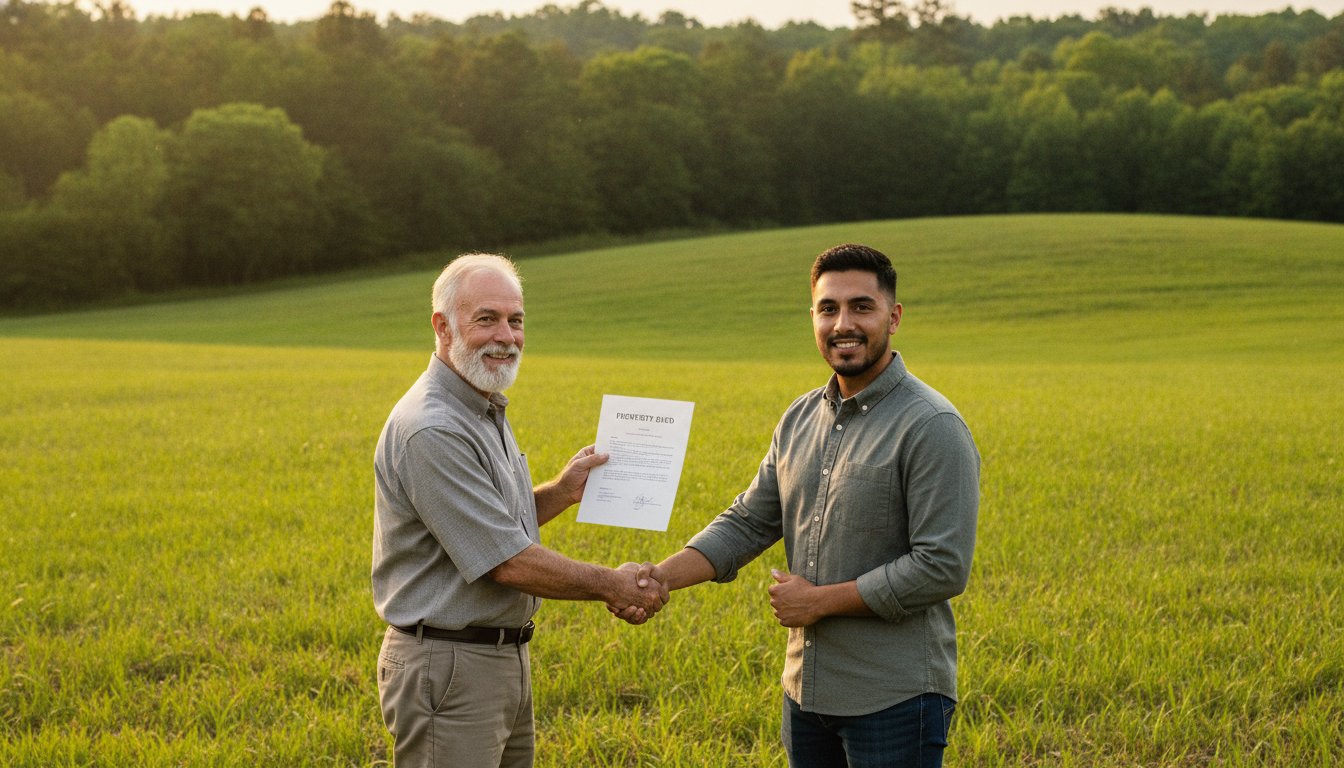
Traditional banks don’t want to fund your land purchase in 2026. Most conventional lenders now demand a credit score of at least 680 and a massive 50% down payment for raw, unimproved parcels. You shouldn’t have to endure months of slow underwriting only to face a rejection. Understanding the benefits of owner financing land allows you to take control of the transaction immediately. This approach replaces rigid corporate hurdles with a direct, pragmatic agreement between you and the seller.
You know how frustrating it is to watch a perfect lot slip away because of bank red tape. It’s a common burden that slows down your path to ownership. This guide shows you how to bypass these obstacles, reduce your closing costs, and secure your property faster through seller-backed financing. We will explore seven critical advantages, including lower upfront cash requirements and flexible payment terms that traditional institutions simply won’t offer.
Key Takeaways
- Identify why banks reject raw land loans and how owner financing closes the collateral gap that stops traditional deals.
- Learn how to use a Promissory Note to define clear payment terms directly with the seller without intermediary delays.
- Discover the key benefits of owner financing land to eliminate bank origination fees and reduce your total upfront cash requirements.
- Master negotiation tactics for balloon payments and down payments to secure an equitable financial proposal that fits your budget.
- Use specialized marketplaces to filter specifically for seller-financed listings and bypass the limitations of traditional real estate sites.
Why Traditional Banks Struggle with Vacant Land Loans
Banks hate raw land. To a traditional lender, an empty lot is a high-risk liability with zero cash flow. If you stop paying, the bank is stuck with dirt that is notoriously difficult to sell quickly. This creates a “collateral gap.” Banks see no immediate value-add on empty lots because there is no structure to provide security for the debt. They view the transaction as a speculative gamble rather than a safe investment. They prefer homes where they can easily assess value through standardized appraisals and steady market demand.
The 2026 lending environment is even more restrictive than previous years. Credit conditions have tightened for 14 consecutive quarters through the middle of 2025, and that trend hasn’t wavered. This makes traditional land loans nearly impossible for the average person with a standard credit score. Private sellers offer the flexibility that institutions lack. One of the primary benefits of owner financing land is its role as a bridge. It connects buyers to property availability without the need for a bank’s permission. You deal with a human being, not a cold algorithm or a rigid loan committee.
The High Down Payment Hurdle
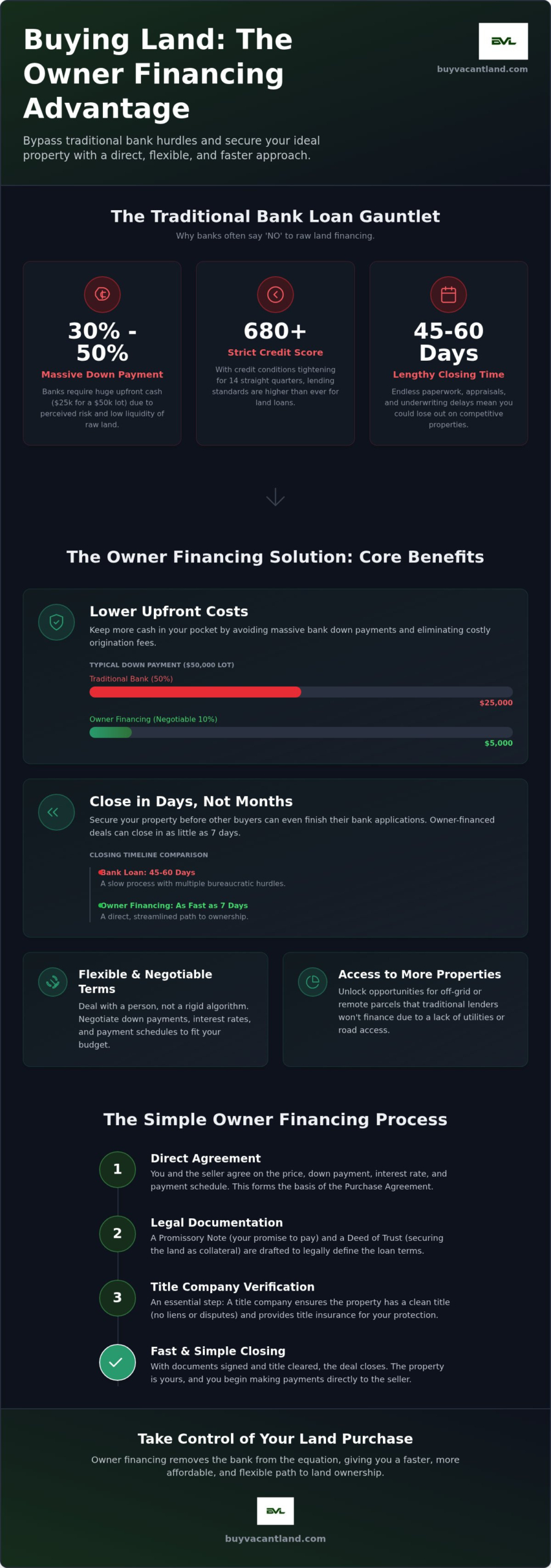
Standard banks usually demand 30% to 50% down for undeveloped property. This massive cash requirement kills the dreams of most first-time land buyers. You might need $25,000 upfront just to secure a $50,000 lot. This barrier exists because lenders don’t trust the asset’s liquidity. They want you to have significant skin in the game to protect their bottom line. Collateral value represents the current market price of the raw land in its unimproved state, excluding any potential future buildings or utility additions. This low valuation is why banks require such high down payments to cover their perceived risk.
Bureaucracy and Underwriting Delays
Bank closings for land typically take 45 to 60 days. You will face a mountain of paperwork, environmental tests, and rigid appraisal standards. This slow pace is a major burden when you find a high-demand property in a competitive market. Owner-financed deals can close in as little as 7 days. This speed allows you to secure prime lots before competitors even finish their initial bank application. Knowing What is Owner Financing? gives you the edge to act fast. You bypass the red tape and move straight to ownership. This efficiency is why many buyers now prefer direct seller agreements to realize the full benefits of owner financing land. By using specialized marketplaces like BuyVacantLand.com, you can find these flexible opportunities and bypass the banking system entirely.
How Owner Financing Works for Land Buyers
Owner financing removes the bank from the equation. You deal directly with the land owner. This direct relationship is the foundation of the transaction. The seller essentially steps into the role of the lender. They collect the principal and interest payments according to the schedule you both agree upon. This streamlined process is one of the top benefits of owner financing land because it simplifies the path to ownership. You avoid the rigid criteria of corporate lending and focus on a practical agreement that works for both parties.
The Purchase Agreement serves as your master document. It dictates the price, the down payment, and the closing date. Once both parties sign, it sets the stage for the financing documents. Understanding How Owner Financing Works ensures you know exactly what you’re signing. The seller retains a legal interest in the property until you fulfill the debt. This structure provides the seller with security while giving you immediate access to the land.
The Promissory Note and Deed of Trust
The Promissory Note is your “I owe you” document. It’s a legally binding promise to repay the debt. This note outlines the interest rate, payment frequency, and penalties for late payments. It is the core of your financial commitment. The Deed of Trust secures the property as collateral. If you stop making payments, the seller uses this document to reclaim the property through foreclosure. You should also understand the difference between a “Contract for Deed” and a “Deed of Trust” structure. In a Contract for Deed, the seller keeps the legal title until the final payment. With a Deed of Trust, the title usually transfers to you at closing, but the seller holds a lien against it until the debt is cleared.
The Role of Title Companies in Private Deals
Never skip the title company. They are essential for a safe, transparent transaction. A title company performs a detailed search to ensure no hidden liens, back taxes, or ownership disputes exist on the parcel. Title insurance protects your investment from future claims. It’s a one-time cost that provides permanent peace of mind. In most seller-financed deals, closing costs are significantly lower because there are no bank origination fees. Usually, the buyer and seller split these fees, or the buyer pays them to secure more favorable interest rates. You can browse owner financed land listings to find properties where these terms are already clearly defined for a fast transaction.
Core Benefits of Owner Financing for Land Buyers
Owner financing transforms the land buying process from a bureaucratic nightmare into a straightforward transaction. You gain immediate access to property that traditional lenders often ignore. One of the major benefits of owner financing land is the ability to secure off-grid or remote parcels. Banks typically refuse to lend on land without utilities or road access. Sellers understand the intrinsic value of these rural lots and are willing to finance them directly. This opens up opportunities for hunting land, farms, and off-grid retreats that would otherwise require 100% cash upfront.
You also build equity from day one. Every payment you make goes directly toward the principal and interest of the land itself. You avoid getting lost in bank administrative cycles. This direct path to ownership ensures your money works for you immediately. You can tailor the payment schedule to match your seasonal income or specific budget requirements. This level of customization is impossible with standardized bank products. You get a deal that fits your life, not a bank’s rigid policy.
Bypassing Strict Credit Requirements
Sellers prioritize your down payment over your FICO score. If you have cash for a deposit, most land owners will work with you regardless of your credit history. This is a game-changer for entrepreneurs and self-employed buyers who often struggle to prove stable income to bank underwriters. Instead of providing years of tax returns, you provide a solid down payment. While terms vary, the average down payment for a seller-financed note in 2024 was about 27%. You can explore a wide variety of owner financed land options on BuyVacantLand.com to find a seller ready to close today. This pragmatic approach focuses on your current ability to pay rather than your financial past.
Lower Upfront and Closing Costs
Traditional loans are expensive. When you use a bank, you pay for origination fees, formal appraisals, and private mortgage insurance. These costs often add thousands of dollars to your closing statement. Understanding how owner financing works helps you see where the savings accumulate. By removing the middleman, you skip these predatory fees entirely. You keep that capital in your pocket. You can then use those savings for immediate land improvements like clearing brush, installing a driveway, or drilling a well. The total benefits of owner financing land include this immediate financial liquidity that helps you develop your property sooner.
Negotiating the Best Terms for Your Land Deal
Negotiation is where you turn a good deal into a great one. Don’t get fixated on the interest rate alone. While traditional land loans in 2026 hover around 8.5% to 9%, owner financing rates typically fall between 6% and 10%. The real power lies in the overall structure. One of the primary benefits of owner financing land is the ability to trade a higher interest rate for a lower down payment or a longer repayment window. You must balance your immediate monthly cash flow with your long-term property development goals. If you plan to build a home in three years, you need lower monthly payments now to save for construction costs.
Always insist on an early payoff clause. Standard bank loans often include prepayment penalties that punish you for being financially responsible. In a private deal, you should negotiate a “no penalty” payoff. This allows you to refinance with a traditional lender later or pay the balance in full if you receive a windfall. It keeps your options open. It also reduces your total interest burden over time. A transparent agreement protects both parties and ensures a swift, assured transaction. This flexibility is a hallmark of the direct buyer-to-seller relationship.
Focusing on the Down Payment
The down payment is your strongest leverage. Sellers often view a high deposit as a sign of commitment. If you can offer 20% or 30% upfront, use that to negotiate a lower interest rate or a shorter loan duration. This “skin in the game” builds immediate trust with the seller. It proves you are a reliable partner who is serious about the asset. A significant down payment often moves the needle more than a perfect credit score ever could. It reduces the seller’s risk and puts you in the driver’s seat during the discussion.
Managing Balloon Payments
A balloon payment is a large, lump-sum payment due at the end of a specific term. Sellers use these to ensure they get their full principal back within a reasonable timeframe. A 5-year balloon is standard in land deals because it provides the seller an exit strategy while giving the buyer time to improve the property. You must have a clear plan for this date. You can refinance the remaining balance, sell a portion of the land, or save the necessary cash over the five-year window. Never sign a deal with a balloon payment unless you have a documented exit strategy. You can browse owner financed land for sale to find sellers who are ready to negotiate an equitable financial proposal today.
Finding Owner Financed Land Deals Nationwide
Traditional real estate websites prioritize bank-financed homes. They often bury seller financing options in the fine print or exclude them from search filters entirely. This inefficiency forces you to waste hours scanning irrelevant listings that don’t meet your financial needs. You need a platform that streamlines the search for non-traditional financing. Specialized marketplaces solve this problem by categorizing land specifically by its financing type. This targeted approach is one of the practical benefits of owner financing land in 2026. It saves you time and connects you with sellers who understand your situation.
Direct communication with land owners is your biggest advantage. You bypass the gatekeepers and talk directly to the person who holds the title. This transparency fosters trust and allows for a swift, assured transaction. You can ask specific questions about the soil, the neighbors, and the local regulations. This information is vital for your long-term plans. Sellers are often more flexible when they understand your vision for the property. A human conversation can lead to terms that a bank algorithm would never consider. It cuts through the noise of traditional procedural hurdles.
Using BuyVacantLand.com for Your Search
Finding owner financed land is a direct, simplified process on our platform. We connect you with sellers who are already prepared to offer an equitable financial proposal. You can browse cheap land for sale and see the financing terms before you even send a message. This eliminates the “collateral gap” and the stress of bank underwriting. You gain national coverage across the US with a few clicks. The marketplace is designed for speed and ease of use. You don’t have to guess if a seller is willing to finance; it’s clearly stated in the listing details.
Final Due Diligence Before You Buy
Verify the land’s utility before you sign the promissory note. Check the local zoning laws to confirm your build plans are legal. Ensure the lot has deeded access so you aren’t landlocked. Review our how do you buy land guide to master the pre-purchase checklist. This step ensures your path to ownership is safe and transparent. Once your due diligence is complete, move quickly to secure the property. Prime lots in 2026 don’t stay on the market long. Start browsing our current listings today to find your perfect parcel and secure your future without the bank.
Take Control of Your Land Ownership Future
You don’t need to wait for a bank to approve your dreams in 2026. The benefits of owner financing land are clear: you skip the credit hurdles, reduce your upfront costs, and move at the speed of a private agreement. You have seen how direct seller-to-buyer relationships create equitable financial proposals that traditional lenders simply can’t match. By focusing on the down payment and negotiating flexible balloon terms, you secure your asset without the stress of corporate bureaucracy. This pragmatic approach puts the power back in your hands.
Success in the raw land market requires an efficient, specialized tool. BuyVacantLand.com provides a direct seller-to-buyer marketplace with an exclusive focus on vacant land. You gain access to national listings across the United States, allowing you to filter specifically for financed parcels. It’s the fastest path to ownership. Don’t let rigid bank policies slow you down. Browse Owner Financed Land Listings on BuyVacantLand.com and finalize your deal today. Your perfect property is waiting for a straightforward, assured transaction.
Frequently Asked Questions
Is owner financing safe for land buyers?
Yes, owner financing is safe if you follow standard real estate procedures. You must use a professional title company to conduct a thorough search for liens or back taxes. Recording your contract or deed at the county office is non-negotiable. This public record protects your claim to the property. A clear, written agreement ensures both parties understand their obligations and rights throughout the term.
Does owner financing require a credit check?
Most sellers do not require a formal credit check. They prioritize your down payment as a sign of financial stability and commitment. This flexibility is one of the major benefits of owner financing land for entrepreneurs or those rebuilding their credit. While some sellers might ask for basic income verification, the process is significantly faster and less invasive than a traditional bank application.
What is a typical down payment for owner-financed land?
Expect to pay between 10% and 30% of the purchase price upfront. This amount is negotiable and varies by seller. A larger down payment can often leverage a lower interest rate or better repayment terms. Data from 2024 shows the average down payment for seller-financed notes was approximately 27%. This cash deposit serves as the primary security for the land owner in the transaction.
Can I build on the land while I am still paying the seller?
You can typically build on the land if the contract permits it. Sellers often encourage improvements because they increase the property’s value. You must confirm that your contract allows for permanent structures before you begin. Also, ensure you obtain all necessary county permits. Some sellers may require you to pay off a certain percentage of the principal before starting major construction projects on the lot.
What happens if I default on an owner-financed land contract?
Defaulting allows the seller to trigger a reclamation process. The specific steps depend on whether you signed a Contract for Deed or a Deed of Trust. In a Contract for Deed, the seller can often terminate the agreement and keep all previous payments. Foreclosure is the standard path for a Deed of Trust. In both cases, you likely lose your equity and the property itself if you stop payments.
Are interest rates higher with owner financing than with banks?
Interest rates are usually higher than bank rates to account for the seller’s increased risk. You will typically see rates ranging from 6% to 12% in 2026. This is often 1 to 3 points above what a credit union might offer for a traditional land loan. However, you save money by avoiding bank origination fees, appraisal costs, and mortgage insurance premiums that banks always charge.
Do I get the deed immediately with owner financing?
You receive the deed immediately only in a Deed of Trust structure. In this scenario, the title transfers to you, but the seller records a lien against it. If you use a Contract for Deed, the seller retains the legal title until you fulfill the entire payment schedule. Both options are legally sound. You should consult with a title company to determine which structure fits your specific deal and goals.
Who pays property taxes during the financing period?
The buyer is responsible for property taxes from the date of closing. Some sellers collect a monthly tax estimate and pay the bill annually through an escrow account. Others require you to pay the tax assessor directly and send them a copy of the receipt. Failing to pay taxes can trigger a default on your financing agreement. Always clarify who handles the actual payment during the initial negotiation.




Join The Discussion