
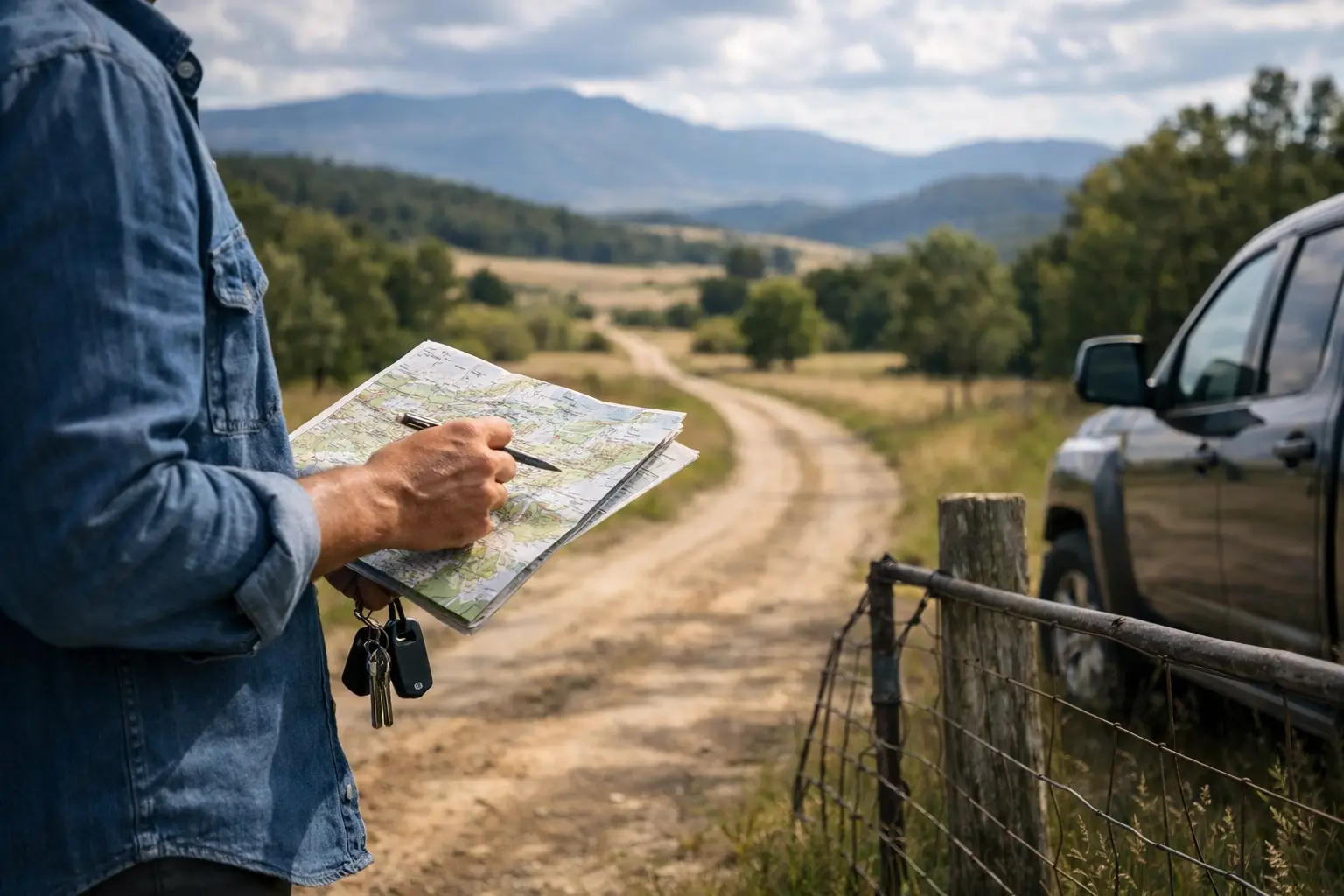
A low purchase price can make a remote parcel look like the opportunity of the year. But if the road ends at a locked gate, crosses someone else’s property, or becomes impassable after a hard rain, that bargain can become an expensive problem. Before you make an offer, take time to evaluate raw land access with the same care you would use to evaluate the land itself.
Access affects what you can do with a property, how easily you can finance or insure it, how much it may cost to improve, and who may want to buy it from you later. Whether you are shopping for a homestead, hunting acreage, an off-grid retreat, or a long-term land investment, clear and usable access protects your options.
How to Evaluate Raw Land Access Before Making an Offer
Start by separating two questions that buyers often combine: Do you have a legal right to reach the property, and can you physically reach it when you need to? A parcel may have one without the other. A recorded easement may provide legal access across neighboring land, for example, but the route could be steep, washed out, narrow, or unsuitable for construction equipment.
The best approach is to trace your route from a public road all the way to the part of the parcel you intend to use. Do not stop your research at the property boundary. If you plan to build a cabin, park an RV, harvest timber, or bring in a well rig, the last half-mile can matter more than the first five miles.
Confirm legal access in the deed and title records
A parcel with frontage on a public road is usually the simplest scenario, but even then, verify where the actual boundary meets the road. A road shown on an online map may be private, abandoned, or merely a trail. County GIS maps are useful starting points, not final proof of access rights.
If the land is reached by an easement, ask for the recorded easement document and review it with a title professional or qualified real estate attorney. You want to know who has the right to use the route, where it is located, how wide it is, and what uses it allows. An easement written for pedestrian or agricultural use may not support a residential driveway, heavy equipment, utility installation, or frequent RV traffic.
Look for language that grants ingress and egress and confirms that the easement benefits the parcel you are buying. Also ask whether the route is exclusive or shared. A shared easement can work well, but it requires clear expectations among neighbors.
Avoid assuming that long-term use of a neighbor’s road creates a permanent right. Permission can be withdrawn, especially after ownership changes. If access is based on a handshake agreement, treat that as a major due diligence issue until the right is properly documented.
Inspect the Actual Route, Not Just the Map
A satellite image cannot show deep ruts, loose sand, low-hanging branches, a washed-out culvert, or a gate that is difficult to open with a trailer behind you. Visit the property and drive the full route yourself if possible. Better yet, visit after rain and at the time of year when conditions are likely to be toughest.
Pay attention to road width, slope, surface material, drainage, and turning space. A narrow two-track path may be perfectly acceptable for a hunting parcel used a few weekends each year. It may be a poor fit for a family planning regular trips, a building project, or a property intended for resale to a broad market.
Ask practical questions as you travel the route. Can a pickup truck reach the parcel? Can an RV or travel trailer make the turns? Could a septic contractor, gravel truck, delivery vehicle, or emergency vehicle get through? If there are bridges, culverts, or creek crossings, check their condition and weight limits.
Seasonal access deserves special attention. Some rural roads are easy to travel during dry months but become muddy, snow-covered, flooded, or deeply rutted during other parts of the year. A seller may honestly say they have reached the land many times, but their experience may not match your intended use. Recreational buyers may accept seasonal limitations. Buyers planning to live on the property usually need dependable year-round entry.
Find Out Who Maintains the Road
Private roads do not maintain themselves. Before buying, determine exactly who is responsible for grading, gravel, snow removal, drainage repairs, gate maintenance, and major improvements.
Some properties are served by a road association with annual dues, written rules, and a predictable maintenance process. That can be a positive sign, provided you review the documents and understand the cost. Check whether dues are current, whether special assessments are possible, and whether the association has enough participation to keep the road in good shape.
In other areas, neighboring owners informally share maintenance. This can be affordable and cooperative, but it can also create uncertainty. Ask whether there is a written road maintenance agreement and request copies of recent invoices or correspondence. If one owner refuses to contribute after a storm damages the road, who pays? If a new owner brings in heavy construction traffic, who repairs the damage?
Do not overlook the cost of improving the final stretch to your preferred building or camping site. Clearing brush, adding gravel, installing culverts, building a bridge, or cutting a driveway into a steep hillside can quickly change the true cost of a land purchase.
Check Access Rules for Your Intended Use
Legal and physical access are only part of the picture. Local, county, and state rules can affect where you may create a driveway and what improvements are required.
If the parcel fronts a county or state road, ask the appropriate road authority whether a driveway or curb-cut permit is required. There may be spacing, visibility, drainage, or culvert requirements. On a busy road, getting an approved entrance may cost more than expected.
For rural land, also consider fire access standards, especially if you plan to build. Some jurisdictions require a minimum road width, turnarounds, posted addresses, or clearance for emergency equipment. A route that is fine for weekend recreation may not qualify for a building permit without upgrades.
Utilities can create another access issue. Power companies may require a usable utility easement and a road that allows service vehicles to reach the site. If you are going off-grid, you may still need reliable access for solar installation, water delivery, propane, waste service, and future repairs.
Documents and Details to Collect Before Closing
Before committing to a raw land purchase, build a file that supports what you have been told. This step can prevent surprises and make future resale easier. Collect these items:
- A current survey or a clear explanation of where surveyed boundaries can be found.
- The recorded deed, easement documents, and title commitment showing access rights.
- Road maintenance agreements, association rules, dues information, and known assessments.
- County or road authority guidance on driveway permits, road status, and addressing.
- Photos and notes from your own inspection of the route in current conditions.
If the seller cannot provide every item, that does not automatically make the property a bad deal. It does mean you should slow down, investigate further, and price the uncertainty appropriately. A survey, title review, or local professional opinion is often far less expensive than solving an access dispute after closing.
Price Access Into the Deal
Land with direct, all-weather public-road frontage generally attracts more buyers and may command a higher price. That does not mean land with easement access or rough roads lacks value. It simply serves a different buyer and should be priced with its limitations in mind.
For an investor, limited access can reduce resale demand and extend the time needed to sell. For a recreational buyer seeking privacy, a gated private road or rugged trail may be part of the appeal. For a future homesite, access should be evaluated against the full cost of getting to a buildable area, not just the purchase price per acre.
A smart offer accounts for the route you are actually buying. If you will need to spend money on driveway work, culverts, legal documentation, or road improvements, include those figures in your land budget from the start.
The right parcel does not need to have a paved road and streetlights. It needs access that matches your plans, your budget, and your tolerance for hands-on ownership. When you verify that route before closing, you can move forward with confidence and focus on what the land can become.



Join The Discussion