

Owning land is a liability until you secure its borders and legal standing. You worked hard to acquire your parcel, but the real work starts the moment the deed is signed. It’s natural to feel overwhelmed by the threat of property line disputes or the confusion of local zoning restrictions. Taking the right first steps for new landowners ensures your investment remains a secure asset instead of a legal headache.
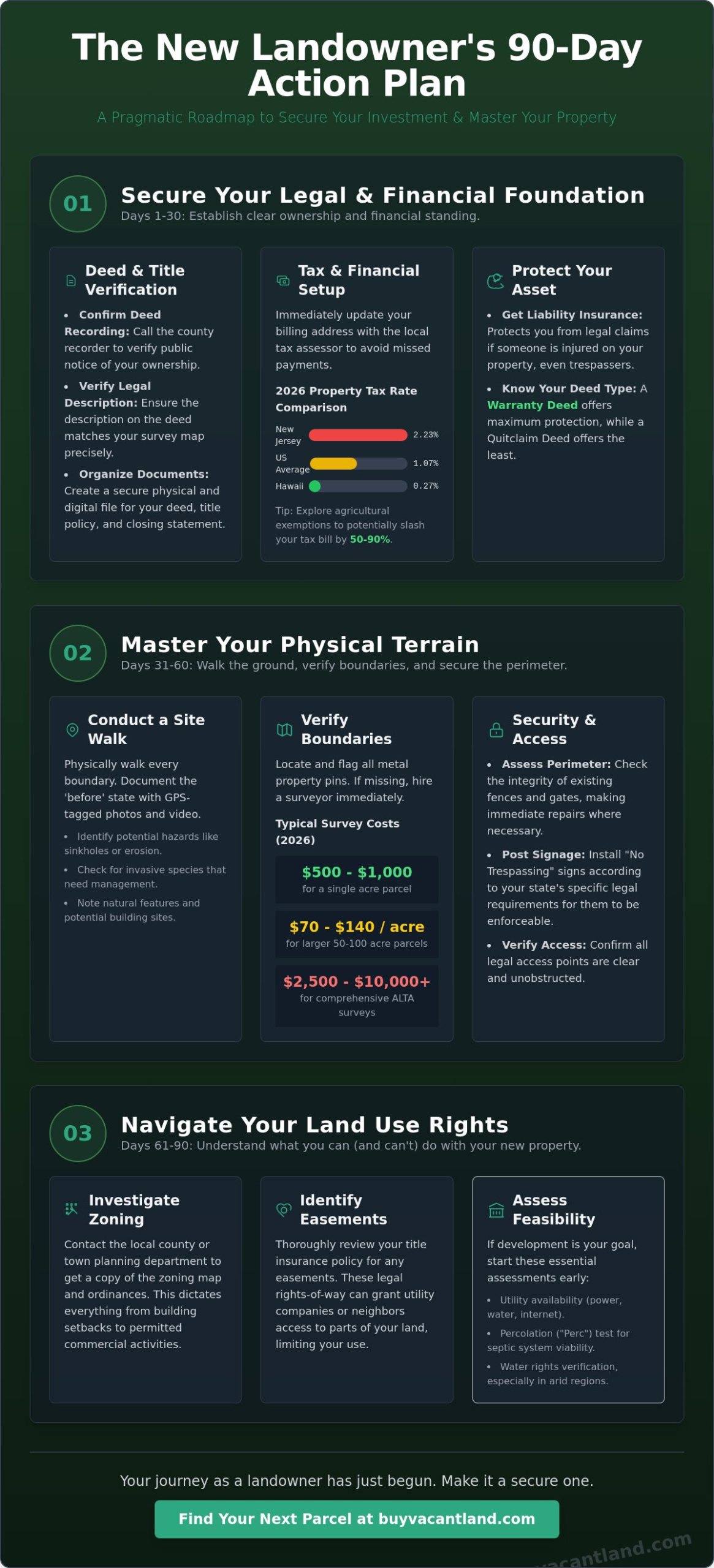
Master the transition from land buyer to land steward with this pragmatic 90-day action plan. This guide provides the exact roadmap you need for clear legal standing and secure property boundaries. Learn how to handle 2026 property tax rates, which range from 0.27 percent in Hawaii to 2.23 percent in New Jersey. Secure your investment by budgeting for essential costs, like the $500 to $1,000 average for a one-acre survey. We cover everything from verifying water rights to understanding the current 5.750 percent FSA Direct Farm Ownership Loan rates. Follow this sequence to build a solid foundation for future development or a profitable resale.
Key Takeaways
- Secure your legal position immediately by verifying the recording of your deed and organizing all title insurance policies.
- Locate professional survey markers and perform a thorough site walk to identify property boundaries and potential hazards.
- Execute the first steps for new landowners by reviewing zoning classifications and identifying easements that limit property usage.
- Assess utility feasibility and schedule a percolation test to confirm your site’s readiness for off-grid or residential development.
- Establish a 90-day stewardship roadmap to maintain property value and monitor local market trends for a future resale.
Securing Your Investment: Immediate Post-Closing Essentials
The closing process is finished, but your legal work is just beginning. Ownership transition is more than a handshake or a signature. It requires a series of administrative strikes to ensure your deed is recognized and your assets are protected. These are the critical first steps for new landowners to prevent future title claims or tax foreclosures.
Confirm the recording of your deed with the local county recorder immediately. Do not assume the title company or the seller handled this correctly. A recorded deed provides public notice of your ownership and protects you against subsequent claims. Call the recorder’s office. Provide your parcel identification number. Verify that the document is indexed in the public record. Once confirmed, establish a dedicated physical and digital file. Store your closing statement, title insurance policy, and the original deed in a secure location. This documentation is your primary defense in any future legal challenge.
Next, contact the local tax assessor to update the billing address. Missing a property tax statement because it went to the previous owner is not a valid legal defense. In 2026, property taxes fund approximately 27.4 percent of state and local government revenue. Authorities are efficient at collecting these funds and aggressive with penalties. Notify the assessor of the change in ownership to avoid late fees and ensure you receive all future notices directly.
The Paperwork Trail: Deeds and Title Insurance
Verify that your deed reflects the exact legal description of the parcel. Even a small clerical error in the metes and bounds can create massive boundary disputes later. A deep understanding land tenure and legal descriptions ensures you know exactly what you own. Keep your title insurance policy accessible. It’s a one-time purchase that defends your ownership against hidden liens or prior claims. You should also know your deed type. A warranty deed offers the highest protection, while a quitclaim deed offers the least. Knowing which one you hold determines your level of risk.
Financial Setup: Taxes and Insurance
Identify specific tax deadlines for your jurisdiction. Rates vary wildly across the country. In 2026, the average property tax rate is roughly 1.07 percent, but owners in New Jersey pay up to 2.23 percent. Owners in Hawaii pay as little as 0.27 percent. Research if your parcel qualifies for agricultural or conservation tax exemptions. Obtaining an agricultural classification can slash your tax bill by 50 to 90 percent. Finally, evaluate the need for vacant land liability insurance. This protects you if someone is injured on your property, even if they are trespassing. These financial first steps for new landowners turn a raw piece of dirt into a secure, managed investment.
Surveying the Terrain: First Physical Steps on Your Property
Physical inspection is your first line of defense. You must verify that the map matches the dirt. Walk every inch of your boundary line. Look for natural features and potential hazards like sinkholes, soil erosion, or invasive species. Document everything. Use high-resolution photos with GPS tags and video to establish a baseline. This record is vital if you ever face unauthorized dumping or trespassing claims. It also serves as a “before” record for any future land improvements or clearing projects.
Finding property pins is one of the most critical first steps for new landowners. These metal stakes define your legal territory. Locate them and flag them with bright tape. If pins are missing or moved, hire a professional immediately. A survey for a single acre in 2026 usually costs between $500 and $1,000. For larger parcels of 50 to 100 acres, costs range from $70 to $140 per acre. If you require a comprehensive ALTA survey for commercial purposes, expect to pay between $2,500 and $10,000. Utilize beginner landowner resources to help you set clear objectives for your new acquisition.
Boundary Verification and Marking
Compare physical pins to your survey map. Ensure the markers align with the legal description found in your deed. Install permanent markers like steel posts or painted stones to maintain visibility over the years. Communicate with your neighbors early. Establishing a friendly rapport regarding boundaries prevents future disputes and creates a network of eyes on your property. If you’re still exploring options for off grid land or hunting acreage, always verify physical access before purchase.
Security and Access Management
Assess existing gates and fences for integrity. Repair any gaps immediately. Post “No Trespassing” signs according to your specific state laws. In many jurisdictions, specific spacing and height requirements must be met for these signs to be legally enforceable. Verify all legal access points. Ensure no neighboring easements are being blocked. Secure access management prevents liability issues and keeps your asset private. These physical first steps for new landowners transform a vulnerable parcel into a managed property.
Navigating Zoning, Easements, and Land Use Rights
Physical possession does not grant absolute freedom. Your land use is dictated by local law. Zoning regulations vary by state, county, and town. They are never standardized. Understanding these rules is among the most vital first steps for new landowners. You must verify what you can legally build before you break ground. Some areas are strictly residential. Others allow for industrial land or commercial ventures. Researching these restrictions early prevents costly legal battles or forced demolition.
Permit fees reflect this hyper-local reality. In Thurston County, WA, a preliminary plat fee is $8,128 per lot as of January 2026. A boundary line adjustment there costs $1,372. Contrast this with Des Moines County, IA. A zoning permit for principal use is only $40. A special use permit is $150. These discrepancies prove you cannot guess your costs. Visit your local planning department. Ask for the current fee schedule and zoning map. Use beginner landowner resources to help navigate these administrative hurdles and set realistic development goals.
Understanding Zoning and Ordinances
Identify “By Right” uses for your parcel. These are activities allowed without a special public hearing or permit. Check setback requirements. These rules determine how far your structures must be from property lines, roads, or water sources. Review the future land use map. Your quiet farms and ranches might be slated for high-density development in the next decade. Check for CC&Rs if your land is part of a subdivision. These private agreements often impose stricter rules than the county.
Easements and Mineral Rights
Locate all utility easements on your plat. Power, water, and sewer companies often have the right to access and maintain lines on your property. You cannot build permanent structures over these zones. Verify your mineral, timber, and water rights. In many regions, the surface rights are sold separately from what lies beneath. Water rights are especially critical if you plan to use wells for livestock or irrigation. Understand the implications of shared driveways. An access easement for a neighbor can limit your privacy and maintenance control. Clearing these legal hurdles is one of the essential first steps for new landowners to ensure full control over their investment.
Planning Infrastructure: Utilities, Access, and Site Preparation
Infrastructure is the bridge between raw dirt and a functional asset. You must determine if your land can support your vision before you spend a dollar on construction. The most critical first steps for new landowners involve verifying utility availability. If public water and sewer aren’t at the road, your development costs will skyrocket. Schedule a percolation (perc) test immediately if you need a septic system. This test measures how quickly soil absorbs water. If the soil fails, you cannot build a traditional residence. This single test dictates the property’s future value.
Access is equally vital. A parcel you cannot reach is a parcel you cannot use. Evaluate the terrain for a driveway. Check if you need a culvert to cross a drainage ditch. Local ordinances often require specific culvert sizes to prevent flooding. Failure to comply leads to fines and property damage. Get firm cost estimates for road base materials and grading. These are the practical first steps for new landowners that secure the physical usability of the property. Clear access ensures that delivery trucks and equipment can reach your site without getting stuck.
Utility Feasibility and Costs
Contact local utility providers to get “will serve” letters. These documents are formal confirmations that the utility has the capacity to serve your parcel. Don’t rely on verbal promises. Get written cost estimates for extending lines. Power companies often charge by the foot or by the pole for extensions. If you are developing off grid land, your focus shifts to self-sufficiency. Research solar exposure and battery storage requirements. Well drilling is a significant investment. Costs vary based on depth and rock layers. Check for existing connections or historical water rights on the property to save on initial setup costs.
Site Preparation and Clearing
Identify which trees or brush need clearing for future access. Clearing is a permanent change. Do it right the first time. Plan for drainage and erosion control before you remove ground cover. Exposed soil washes away quickly in a storm. Use silt fences or hay bales to protect your investment. Determine if you need a professional land survey for specific development goals like building a barn or fence. If you want to skip the heavy lifting, you can find residential lots that already have basic site preparation completed.
Maximizing Land Value: Stewardship and Future Development
Ownership is not a passive state. Land is a dynamic asset that requires active management to maintain its peak value. Neglect leads to depreciation through erosion, invasive species, or unauthorized encroachment. These final first steps for new landowners focus on turning a raw parcel into a high-performing investment. Establish a long-term management plan immediately. This document should outline your goals for the next five years. Whether you intend to build, hold, or sell, every action you take should move you closer to that objective.
Offset your carrying costs by exploring low-impact uses. Leasing your property for hunting or agriculture can generate immediate cash flow. More importantly, it often helps you qualify for agricultural tax classifications. In 2026, these classifications can reduce your property tax burden by 50 to 90 percent. Monitor local market trends monthly. Understand the demand for specific types of parcels in your county. If you plan to sell, keep meticulous records of all improvements. Clearing brush, installing gates, or improving drainage increases your cost basis. This documentation is essential for minimizing your capital gains tax liability when you eventually exit the investment.
Land as an Investment Asset
Treat your property like a stock portfolio. Use a specialized marketplace to track the current value of cheap land for sale in your immediate area. Evaluate the return on investment for minor improvements. A simple fence or a cleared building pad can significantly increase the resale price. Timing is everything. Understand how buying land usa market cycles fluctuate with interest rates. For example, the Agricultural Conservation Easement Program (ACEP) has a second application deadline on May 29, 2026. Programs like these offer financial incentives for stewardship that can protect your land’s value for decades.
The Next Steps for Your Parcel
Define your exit strategy early. Decide if you will hold the land for long-term appreciation or develop it for immediate use. If your goals change, be ready to pivot. You can list your property on a professional vacant land listing platform to reach targeted buyers quickly. Consult with land professionals to refine your development or conservation goals. A 5-year vision keeps your budget on track and prevents wasted effort on unnecessary projects. These strategic first steps for new landowners ensure your property remains a source of wealth rather than a financial drain.
Secure Your Legacy and Scale Your Land Portfolio
You now possess the pragmatic blueprint to transition from a land buyer to a professional land steward. Securing your recorded deed and verifying your physical boundaries are the non-negotiable first steps for new landowners. This 90-day plan eliminates the stress of asset ownership by replacing confusion with a documented path to security. You’ve learned to navigate 2026 tax deadlines and verify critical infrastructure like perc tests and utility easements. These actions protect your capital and ensure your property remains a liquid, high-value asset.
Success in land ownership requires constant market awareness and efficient management. If your investment goals shift or you’re ready to scale your portfolio, use a platform designed for your specific niche. List your vacant land for sale on our national marketplace to access a network of buyers across the United States. We focus exclusively on raw land parcels and provide a simplified listing process that respects your time. Your land is a powerful financial tool. Manage it with precision and watch your equity grow as you master the terrain.
Frequently Asked Questions
How soon after buying land do I need to pay property taxes?
You must pay property taxes according to your county’s specific billing cycle, which typically occurs annually or semi-annually. Contact your local tax assessor immediately after closing to confirm the next due date and verify your billing address. Proactively managing this prevents the aggressive penalties associated with late payments. Since property taxes fund 27.4 percent of local government revenue, authorities are highly efficient at collection.
Do I need insurance for a vacant lot with no buildings?
Yes, you should obtain vacant land liability insurance to protect yourself from legal claims. This policy covers you if someone is injured on your property, regardless of whether they were invited. It is a low-cost safeguard against the financial ruin that can follow a personal injury lawsuit. Securing this coverage is one of the most critical first steps for new landowners to mitigate risk.
What is a percolation test and why is it important for new owners?
A percolation test measures the water absorption rate of your soil to determine its suitability for a septic system. If your land fails this test, you cannot build a traditional residence on the site. This failure significantly reduces the property’s development potential and resale value. Schedule this test early in your 90-day plan to confirm your parcel’s long-term utility.
Can I clear trees from my land immediately after purchase?
Check your local zoning ordinances and environmental restrictions before removing any vegetation. Many jurisdictions require permits for clearing specific tree species or large areas of forest. Unauthorized clearing can lead to heavy fines and legal stop-work orders. Taking these first steps for new landowners ensures you remain compliant with hyper-local regulations that vary significantly between counties.
How do I find out if there are hidden easements on my property?
Review your title insurance policy and the official plat map included in your closing documents. These records identify the legal rights utility companies or neighbors have to access your land. You should also visit the county recorder’s office to search for any recorded agreements that might not appear on a standard map. Identifying these early prevents future construction conflicts and boundary disputes.
What should I do if a neighbor is encroaching on my new land?
Verify your property lines with a professional land survey before addressing the issue with your neighbor. Use the survey pins to demonstrate the legal boundary and attempt to resolve the matter through direct communication. If the neighbor refuses to remove their structures or equipment, you must consult a real estate attorney. Having a current survey is your primary evidence in any legal proceeding.
Is it necessary to fence my vacant land right away?
Fencing is not a legal requirement, but it serves as a vital physical deterrent against trespassing and unauthorized dumping. It provides a clear visual marker of your territory and helps prevent accidental encroachment by neighbors. For owners of off-grid land or hunting parcels, a fence is a pragmatic investment in the privacy and security of the asset.
How can I lower the property taxes on my vacant land?
Apply for an agricultural or conservation tax classification if your parcel meets the local acreage and usage requirements. In many jurisdictions, this classification can reduce your property tax burden by 50 to 90 percent. Research the specific requirements in your state, such as minimum income generation or timber management plans. This is a highly effective way to minimize the ongoing costs of land ownership.




Join The Discussion