

A vacant parcel can be easy to overlook when it is marketed like a house without walls. Buyers cannot walk through a kitchen or picture a finished backyard, so the listing must do more of the work. To market a vacant land listing online effectively, show buyers what the property can become, explain what makes it usable, and put it in front of people actively searching for land.
The goal is not simply to collect views. A strong land listing attracts qualified inquiries from buyers who understand the location, intended use, price range, and key property conditions before they ever contact you. That saves time, builds confidence, and creates a clearer path to an offer.
Start With the Land’s Best Use
Every parcel has a story, but the best listing story is practical. Before writing a description or taking photos, identify the likely buyer and the property’s strongest use. A wooded five-acre tract may appeal to a recreational buyer, a future homesteader, or someone looking for privacy. A small lot near town may be better positioned for a builder, investor, or buyer planning a manufactured home.
Do not try to sell the same land as everything to everyone. If zoning, road access, utilities, terrain, or deed restrictions limit a use, be clear about it. Overpromising may create more inquiries in the short term, but it also leads to disappointed prospects and lost momentum.
Use the property’s real advantages to shape the message. Maybe it has paved road frontage, power nearby, mountain views, a seasonal creek, mature timber, proximity to a lake, or flexible owner financing. Those details are not filler. They help buyers decide whether the land fits their plans.
Match the Listing to Buyer Intent
Land buyers often begin with a purpose, not a property type. They may search for hunting land, off-grid acreage, an RV lot, a residential lot, a farm, or affordable owner-financed land. Categorize the parcel accurately and use plain language that reflects how real buyers search.
For example, a listing for rural acreage should state whether it is suitable for camping, recreation, a cabin, livestock, or a future homesite based on the available facts. If it is not buildable or requires additional approvals, say so directly. Honest positioning makes a listing more credible and helps the right buyer recognize the opportunity.
Price for Attention and Credibility
Price is one of the fastest ways to earn a click or lose one. Buyers compare land across nearby counties, states, and property types, often within minutes. A price far above comparable properties can leave a listing sitting unnoticed. A price far below the market can create skepticism if the listing does not explain why.
Review recent sales when possible, but also study active competition. Look at parcels with similar acreage, access, utilities, zoning, terrain, and location. A one-acre lot with water and sewer availability is not comparable to one acre with no legal access. Likewise, ten acres of flat, usable land may command more than a larger tract made up mostly of steep terrain or wetlands.
If you offer owner financing, make the terms easy to understand. Include the down payment, monthly payment, interest rate if applicable, loan term, and any fees. For many buyers, financing turns a land purchase from a future goal into a realistic next step. Clear terms also reduce low-quality inquiries from people whose budget does not match the property.
Create Photos That Answer Questions
Land photos should do more than prove the parcel exists. They should help a remote buyer understand what they would see when they arrive. Begin with clear road-frontage images, entry points, open building areas, views, tree cover, water features, and any visible utility connections or nearby poles.
Take photos in good light and avoid relying on one distant image of trees or grass. If the parcel is large, photograph multiple areas so buyers can see changes in terrain and character. Aerial images can be especially useful for showing boundaries, nearby roads, neighboring development, and the overall layout.
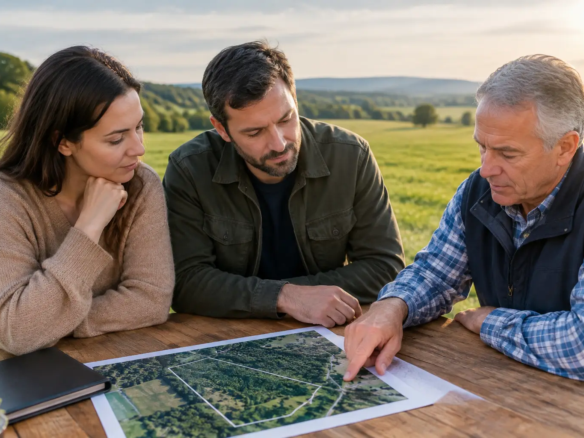
Maps matter just as much. Include an accurate parcel map or survey if available, along with a location map that shows distance to recognizable towns, highways, lakes, or outdoor destinations. Buyers do not need the exact address to understand the area, but they do need enough context to decide whether a visit makes sense.
If you use boundary lines on aerial photos, label them as approximate unless they come directly from a survey. That small detail protects expectations and signals professionalism.
Write the Details Buyers Need Before They Ask
A well-written listing removes uncertainty without burying the reader in legal language. Lead with the clearest value proposition, then provide the facts a serious buyer needs to evaluate the property.
Include acreage, county and state, parcel number if appropriate, road access, zoning or land-use designation, annual taxes, HOA or POA information, utilities, terrain, flood-zone status when known, and any relevant restrictions. If the property has a survey, perc test, well, septic system, easement, or mineral-rights information, state it clearly.
Be careful with claims about building. Saying “build your dream home” can be effective only when the property’s status supports that statement. If a buyer must verify permits, septic suitability, or zoning with the county, say that. Land due diligence is part of every purchase, and straightforward disclosures create stronger buyers.
Turn Features Into Real Possibilities
Facts establish trust, but buyers also want to picture the outcome. Connect each feature to a practical benefit. Road access means easier arrival for an RV, materials delivery, or a future construction project. A cleared area may reduce the work needed for a campsite or homesite. Nearby public land can add recreational appeal.
Keep this language grounded. A parcel does not need to promise instant wealth or a guaranteed build site to be compelling. The right buyer is looking for a place that supports a specific plan, whether that plan is a weekend retreat, a long-term investment, or a piece of land to pass down to family.
Choose Land-Specific Exposure
General real estate platforms can provide reach, but vacant land needs a setting where buyers can filter by the details that matter. A buyer looking for waterfront land in Arkansas, owner-financed acreage in Arizona, or hunting property in Missouri should be able to search by that intent instead of sorting through thousands of houses.
That is why a land-focused marketplace can make a meaningful difference. BuyVacantLand.com gives sellers access to buyers who are already searching for vacant lots, acreage, rural property, recreational land, and other land categories across the country.
When you market a vacant land listing online, use the most relevant categories, state and county information, and financing tags. A listing that appears in the correct search results is more valuable than broad exposure that reaches people who only want a home.
Consider featured placement when the property is in a competitive area or when you need visibility quickly. It is not necessary for every parcel, but it can help a well-prepared listing gain traction during the first weeks, when fresh listings often receive the most attention.
Make It Easy to Take the Next Step
Interest fades quickly when a buyer cannot get basic questions answered. Respond promptly, but prepare a simple information package before inquiries arrive. It might include the parcel map, survey, directions, tax information, financing terms, and known utility or zoning details.
Provide clear instructions for scheduling a visit. If the land is remote, explain the road conditions, gate access, cell-service limitations, and whether four-wheel drive is recommended. Buyers appreciate direct guidance, especially when they are traveling from another county or state.
For remote buyers, offer what you can to reduce uncertainty: recent video, a live video walkthrough, additional photos from requested locations, or a marked map. You do not need to oversell the parcel. You simply need to make it easier for a serious buyer to complete their research.
Keep the Listing Active and Accurate
An online listing is not a one-time task. Review it after the first few weeks. If it receives views but few inquiries, the issue may be price, missing information, weak photos, or unclear positioning. If it receives inquiries but no serious follow-up, look closely at whether the listing creates expectations the property cannot meet.
Refresh photos when seasons change or when you clear an access path, complete a survey, adjust the price, or add financing. Update the description as new information becomes available. Small improvements can give buyers a reason to look again.
The best land listings make ownership feel both exciting and understandable. Give buyers a clear picture of the ground, the numbers, and the possibilities, then let the right parcel speak for itself.


Join The Discussion