
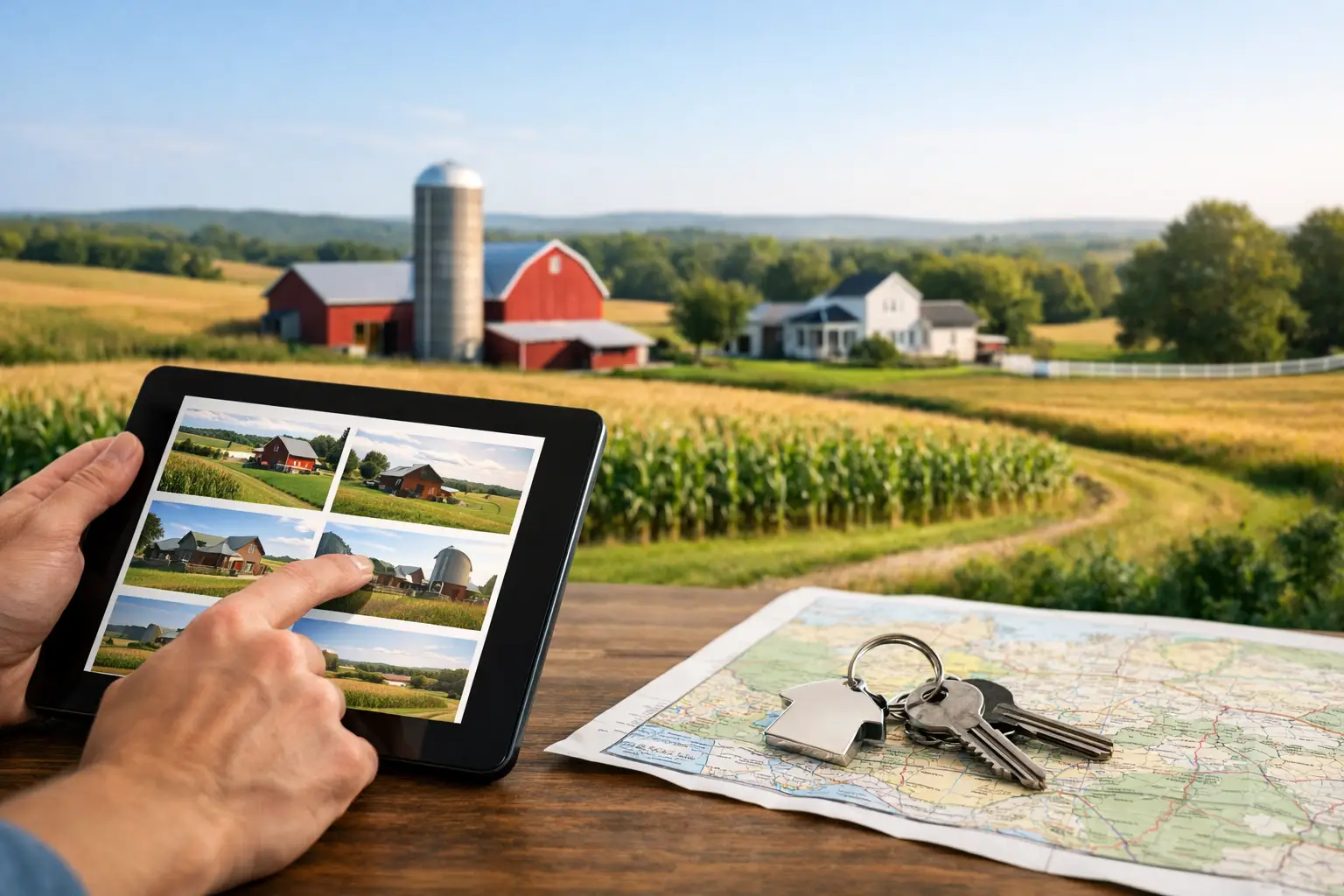
A farm listing can look perfect on paper and still be wrong for your goals. Ten acres with a barn means one thing to a hobby farmer, another to an investor, and something entirely different to a buyer planning a full-time homestead. If you’re searching for farms for sale in USA markets, the smartest move is to get clear on use first, then evaluate properties through that lens.
That matters because farm real estate is not a one-size-fits-all category. Some buyers want income potential. Others want privacy, room for animals, or a long-term land hold with agricultural upside. The right deal is usually less about finding the prettiest parcel and more about matching location, water, soil, access, and price to what you actually plan to do with the land.
What buyers really mean by farms for sale in USA
When people search for farms, they are often looking at a wide range of property types. One listing may be a small fenced tract with a modest house, while another is row-crop acreage, pastureland, orchards, or mixed-use rural property with barns, ponds, and equipment sheds. That spread is exactly why buyers can get overwhelmed.
A better approach is to narrow the category early. If you want a lifestyle property, your priorities might be livability, road access, and manageable acreage. If you’re buying for production, you will care more about soil quality, water rights, drainage, and whether the land has actually been used in a profitable way. If you’re an investor, resale demand and entry price may matter more than whether the fencing is new.
That is also why broad real estate portals can feel messy for land buyers. Farm shoppers usually need a more targeted search process, one that lets them compare rural properties by land use, state, acreage, and practical buying criteria instead of browsing homes with a little extra yard.
Start with your real goal, not just the acreage
A common mistake is assuming more acres automatically means more opportunity. Sometimes it does. Sometimes it means higher carrying costs, more maintenance, more fencing, more tax complexity, and a bigger due diligence checklist.
Before you contact sellers, decide what success looks like. Are you trying to raise livestock, grow specialty crops, lease the land, build a home, or hold the property as a long-term asset? Those are very different strategies, and each one changes what a good deal looks like.
For example, a buyer interested in horses may prioritize pasture, fencing, and access to local riding areas. A buyer planning a small agricultural business may focus on water availability, zoning, and the ability to add structures. A recreational buyer may care more about open space, hunting potential, and a mix of usable terrain. Clarity upfront saves time and keeps you from chasing listings that sound exciting but do not fit your plan.
The features that matter most on a farm listing
Price and acreage grab attention first, but they should not be the final decision-makers. In farm real estate, value often sits in the details.
Water is near the top of the list. That could mean wells, ponds, creek frontage, irrigation infrastructure, or legal rights tied to the property. A farm without reliable water may still work for some buyers, but it can dramatically limit what you can do with the land.
Access is another big one. A property can be beautiful and still be hard to use if the road frontage is limited, seasonal, or dependent on an easement. The same goes for utilities. Some buyers want true off-grid potential, while others need power nearby and a realistic path to septic and residential use.
Then there is the land itself. Flat, open acreage is not automatically better than rolling or wooded ground. It depends on the intended use. Pasture, tillable fields, timber value, drainage patterns, and flood exposure all shape both current usefulness and future resale.
Existing improvements should also be weighed carefully. Barns, fencing, corrals, greenhouses, equipment storage, and homes can add major convenience, but only if they are functional and aligned with your goals. Old structures can just as easily become repair costs.
Best states and regions depend on budget
There is no single best place to buy a farm in the United States. There is only the best fit for your price range and intended use.
In some parts of the Midwest, buyers are drawn to established agricultural regions with strong soil and farm culture, but pricing can be higher in productive areas with strong demand. In parts of the South, buyers may find more affordable acreage with room for hobby farming, livestock, or mixed recreational use. Mountain states and western markets can offer dramatic scenery and privacy, but water and access become even more important there.
The Southeast often attracts buyers looking for lower entry points, longer growing seasons, and flexible rural land use. Parts of the Northeast appeal to buyers who want scenic small farms, local food opportunities, or legacy property, though parcel size and pricing can vary a lot by county.
This is where a land-focused marketplace becomes useful. Instead of searching blindly, buyers can compare farm opportunities by state, price point, and land type in one place. On BuyVacantLand.com, that kind of targeted browsing helps you move faster from general interest to realistic options.
How to evaluate pricing without guessing
Farm pricing is not always intuitive. Two properties with similar acre counts can be priced very differently because of water, improvements, road frontage, zoning, agricultural history, or local demand.
Start by comparing nearby listings with similar land characteristics, not just similar size. A 20-acre parcel with usable pasture, a well, and direct county road access should not be judged the same way as 20 raw acres with no utilities and limited access.
You should also think in terms of total cost, not purchase price alone. Closing costs, cleanup, fencing, utility installation, soil work, road improvements, and equipment needs can move the real number fast. A cheaper property may become more expensive if it requires major setup before you can use it.
If the listing has income history, lease information, or active agricultural use, review that carefully. Revenue can support value, but only if it is documented and sustainable. For many buyers, the best farm purchase is not the one with the most features. It is the one with the clearest path from purchase to practical use.
Financing farms for sale in USA
Financing is one of the biggest sticking points for first-time buyers. Farm properties do not always fit standard residential loan boxes, especially when the value is primarily in the land rather than a house.
That does not mean financing is off the table. It just means buyers should understand the likely options early. Depending on the property, you may look at land loans, agricultural lending, local bank financing, or owner financing if available. Each route has trade-offs in down payment, interest rate, loan term, and property eligibility.
Owner financing can be especially attractive for buyers who want flexibility or are buying a smaller farm tract. Traditional lenders may offer stronger rates on certain improved properties, but underwriting can be stricter. Either way, it helps to know your budget before you shop seriously. Sellers respond differently when they know a buyer is ready.
Due diligence is where smart buyers separate themselves
A farm can feel like an emotional purchase, and that is exactly why due diligence matters. You are not just buying scenery. You are buying access, legal rights, physical condition, and future possibilities.
At minimum, confirm boundaries, legal access, taxes, zoning, deed restrictions, flood exposure, and utility options. If farming activity is part of the plan, look harder at soil, water, drainage, and any environmental issues that could affect use. If there are structures, inspect them. If there is a well, learn its status. If there are easements, understand how they affect privacy and operations.
This step does not have to be complicated, but it should be disciplined. Buyers get into trouble when they assume rural land works the way a suburban home purchase works. It often does not. More variables are involved, and small details can have a big impact on what the property is actually worth to you.
The best farm is the one you can use with confidence
There is real opportunity in the farm market right now, especially for buyers who want flexibility, long-term ownership, or a more intentional lifestyle. But the winning move is not rushing into the first scenic parcel that fits your budget. It is finding a property that supports your plan from day one and still makes sense five years from now.
If you stay focused on use, compare listings carefully, and treat due diligence as part of the opportunity instead of a chore, you put yourself in a much stronger position. The right farm does more than check a box on acreage. It gives you room to build, grow, invest, and move forward on your terms.
Join The Discussion