
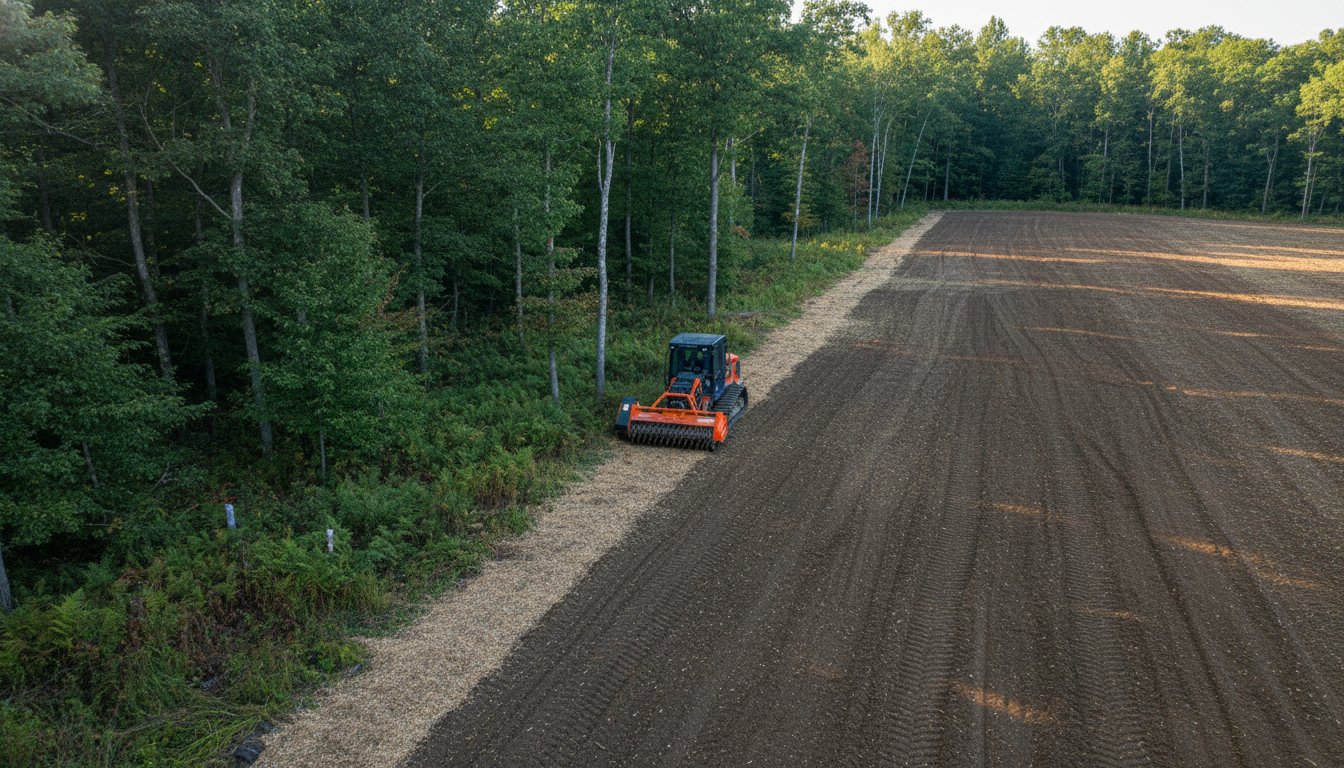
Raw land is only a burden until you prepare it for the market. Land clearing isn’t just an expense; it’s a strategic value-add that transforms an inaccessible lot into a liquid asset. You likely worry that hidden fees for stump removal or complex grading will drain your budget before you even break ground. It’s a common fear that keeps many investors from maximizing their returns. Knowing the exact cost to clear an acre of land is the difference between a profitable flip and a financial headache.
We’ve built this guide to give you a direct, no-nonsense breakdown of 2026 pricing. You’ll get clear estimates ranging from $1,500 for light brush to over $8,000 for heavy timber. We promise to show you exactly how to budget for equipment and permits without the usual industry fluff. You’ll learn which clearing methods save the most cash and how these site prep steps directly increase the resale value of your residential lot or farm. Let’s get your land ready for a swift, profitable transaction.
Key Takeaways
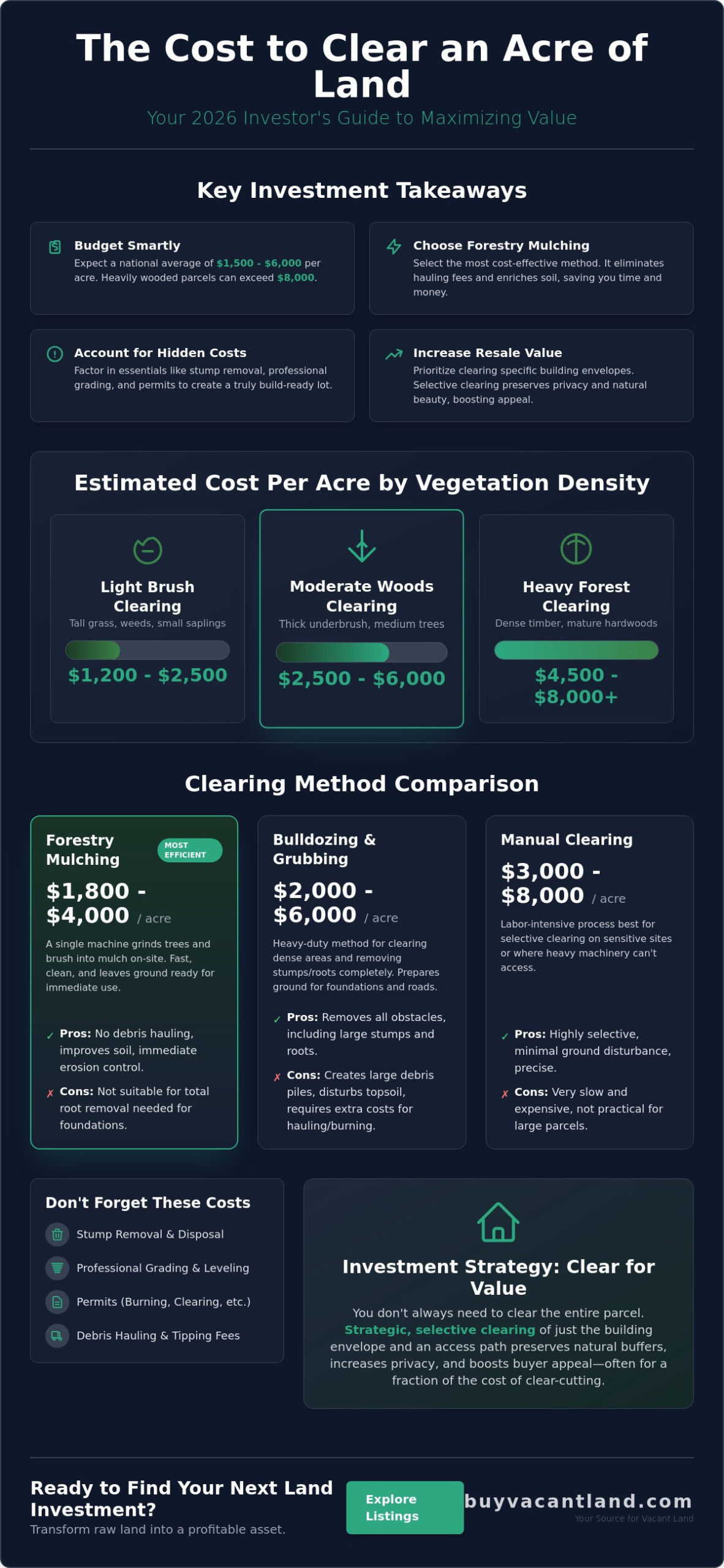
- Budget between $1,500 and $6,000 as the national average for standard site preparation. Heavily wooded parcels can exceed $8,000 per acre depending on vegetation density.
- Select forestry mulching for the most cost-effective results. This method eliminates hauling and disposal fees by turning brush into nutrient-rich ground cover.
- Factor in the hidden cost to clear an acre of land, including stump removal and professional grading. These steps are essential to ensure your lot is build-ready and well-drained.
- Prioritize clearing specific building envelopes rather than clear-cutting the entire parcel. Selective clearing preserves privacy and increases the final resale value of your investment.
- Compare professional labor rates against the true cost of DIY equipment rentals. Account for fuel, insurance, and the risk of machine damage before you rent a skid steer.
Estimating the Total Cost to Clear an Acre of Land
Land clearing is the process of transforming raw terrain into a buildable or sellable site. It involves the systematic removal of overgrown vegetation, large rocks, and discarded debris to prepare the ground for its next phase of use. For investors and developers, the “per acre” metric is the gold standard for budgeting. It provides a scalable unit of measurement that allows you to calculate the potential return on investment before you commit capital. In 2026, the baseline cost to clear an acre of land typically falls between $1,500 and $6,500. This range covers the vast majority of residential and commercial projects, though extreme cases can push prices higher.
To accurately estimate your project, you must categorize your property into one of three primary tiers. Light brush clearing, which involves removing tall grass and small saplings, is the most affordable tier. Moderate woods clearing requires more heavy machinery to handle thick underbrush and medium-sized trees. Heavy forest clearing is the most intensive tier, involving dense timber and mature hardwoods that require significant labor and specialized equipment. Each tier represents a different level of operational complexity and equipment requirements.
Why Land Clearing Costs Vary So Much
Vegetation density is the primary driver of price. Clearing a flat field of weeds is a fast, mechanical process; however, removing 50-year-old oak trees requires individual felling and stump extraction. Terrain challenges also dictate the final invoice. Steep slopes, marshy ground, or rocky soil prevent standard equipment from moving quickly, which increases hourly labor costs. You must also consider the environmental impact of land clearing and the resulting debris disposal. Choosing to burn debris on-site is often the cheapest route, provided local ordinances allow it. If you must haul tons of vegetation to a landfill, expect your transportation and tipping fees to rise sharply.
The Investment Perspective: Clearing for Value
A cleared lot creates immediate curb appeal. Buyers often struggle to visualize the potential of a “jungle,” but a prepared site looks like a ready-to-build asset. Strategic clearing is a core component of a successful how do you buy land strategy. By removing the physical barriers to entry, you make your property more liquid and more attractive to traditional lenders. You don’t always need to clear every square inch. Often, clearing just the building envelope and a driveway path is enough to secure a premium sale price while keeping your initial costs low.
Clearing Methods and Price Ranges by Land Type
The choice of method determines your speed and your bottom line. Efficiency is the goal. Manual clearing is slow and expensive for large parcels, costing between $3,000 and $8,000 per acre due to high labor intensity. It’s only practical for selective thinning or sensitive residential sites where heavy machinery cannot reach. For most undeveloped vacant land, mechanical methods are the industry standard. These methods allow for a faster turnaround and a more predictable cost to clear an acre of land.
For light brush clearing, expect to pay between $1,200 and $2,500 per acre. This category includes tall grass, weeds, and saplings under two inches in diameter. A skid steer with a brush hog attachment handles this quickly. This method is perfect for maintaining small residential lots or preparing a flat area for an off-grid cabin. It’s a low-impact solution that keeps your initial investment manageable.
Heavy forest clearing is a different beast. Densely wooded areas with mature trees cost between $4,500 and $8,000 per acre. You need excavators and feller bunchers for this work. If your land has high-quality hardwoods, you might offset the cost to clear an acre of land. The “cut and sell” option allows you to trade timber value for clearing services. However, small parcels rarely produce enough volume to interest commercial loggers. Most contractors require at least 10 to 20 acres of high-yield timber to consider a profit-sharing arrangement. Check for Financial incentives for land clearing through state programs to help cover these expenses.
Forestry Mulching: The Modern Efficient Choice
Forestry mulching is the most efficient modern choice for land preparation. It costs between $1,800 and $4,000 per acre. A single machine grinds trees and brush into mulch instantly. You save money because there are no debris piles to burn or haul away. The mulch layer provides immediate erosion control and enriches the soil. In 2026, an operator with a high-flow mulcher typically charges between $150 and $250 per hour. This method is fast, clean, and leaves the ground ready for immediate foot traffic.
Traditional Bulldozing and Grubbing
Use a bulldozer when you need total root removal for a foundation or a road. Dozer clearing costs between $2,000 and $6,000 per acre. It’s effective for heavy clearing but creates massive debris piles. You’ll face additional costs for burning or hauling these piles to a landfill. Bulldozing also disturbs the topsoil significantly. This often requires extra grading later to fix the terrain. It’s a powerful method, but it comes with higher secondary costs.
Hidden Variables: Stumps, Grading, and Permits
The surface clearing is only half the battle. Many investors calculate their initial budget based on what they see above ground, but the real expenses often hide below the surface. If you ignore these variables, your total cost to clear an acre of land can double without warning. You must account for the physical removal of root systems, the correction of the terrain, and the legal right to disturb the soil. These factors turn a simple “mow and go” job into a complex engineering project.
Proximity to utility lines also dictates your pricing. If your parcel sits near high-voltage overhead lines or sensitive underground fiber optics, contractors must use specialized equipment and spotters. This adds a safety premium to the hourly rate. You don’t want the liability of a severed line or a downed power pole on your hands. Always call 811 before any heavy machinery touches your dirt to avoid catastrophic repair bills.
The High Price of Underground Removal
Stump removal is expensive because it requires massive torque and significant debris disposal. You have two choices: stump grinding or total extraction, also known as grubbing. Grinding leaves the root ball in place, which is fine for a pasture but disastrous for a residential lot. As those roots rot over time, the ground will sink, creating dangerous sinkholes under driveways or foundations. Stump removal often accounts for 20-40% of the total clearing budget. Total extraction requires heavy excavators to rip the root system out entirely, which costs between $250 and $800 per stump depending on the tree size.
Permits and Environmental Regulations
You cannot simply start bulldozing without the proper paperwork. National permit costs range from $50 to $2,000 depending on your local municipality. These permits often require you to implement erosion control measures, such as installing silt fences or immediate hydroseeding. If your land contains protected wetlands, federal regulations may prevent you from clearing certain areas entirely. Violating these rules results in heavy fines that far exceed the cost of the clearing itself. Always invest in a professional land survey before you break ground. A survey clearly marks your boundaries and identifies sensitive environmental zones, ensuring you don’t accidentally clear your neighbor’s timber or a protected habitat.
Grading is the final hidden hurdle. Once the vegetation is gone, you must ensure the land drains properly. Professional grading for an acre can range from $15,800 to $44,535, with a national average of around $30,000. Without this step, your cleared lot will turn into a swamp after the first heavy rain. Proper drainage is essential to protect your investment and make the land truly build-ready.
Professional Land Clearing vs. DIY
Renting a skid steer feels like a money-saving move until the first hydraulic line snaps in a remote field. DIY land clearing is a high-stakes gamble with your time and your capital. While the initial rental fee looks attractive, the actual cost to clear an acre of land on your own often exceeds professional quotes. Efficiency is the primary reason. A professional operator with a high-flow mulcher can clear more ground in four hours than a novice can in two full days of struggling with the controls. If your project exceeds one acre, the professional route is almost always the more pragmatic financial choice.
Safety risks are a major deterrent for the DIY approach. Falling timber and high-pressure hydraulic failures cause serious injuries every year. You also face the “Hidden DIY Cost” of fuel, insurance, and potential repair bills. Rental companies hold you liable for every scratch or bent tooth on their machinery. A single mistake with a 50-year-old oak can lead to thousands of dollars in equipment damage that your standard homeowner’s insurance will not cover. Professionals carry their own liability insurance, which shifts the risk away from you entirely.
Renting Equipment: What You Need to Know
In 2026, daily rental rates for a skid steer with a mulcher attachment range from $300 to $600. General heavy equipment rentals for excavators or dozers fall between $500 and $1,100 per day. You must also factor in transportation fees, which typically cost between $200 and $2,000 depending on the distance and the size of the truck required. A novice operator faces a steep learning curve. You will likely spend your first eight hours just getting comfortable with the machine rather than making real progress on the terrain. This inefficiency turns a one-day rental into a three-day drain on your budget.
When to Hire a Professional Crew
Hire a professional crew when you need a “finished” look that attracts high-value buyers. Professional land clearing services typically charge between $110 and $250 per hour. Always request a lump-sum quote rather than an hourly rate to keep your budget predictable. Verify their liability insurance and ask for references from recent local projects. A clean, professionally prepared lot is essential for moving cheap land for sale quickly. Buyers pay a premium for land that looks manageable and ready for immediate use.
Ready to start your next project? You can buy vacant land parcels that are already partially cleared and ready for development today.
Maximizing Land Value with a Strategic Clear
Strategic clearing is the most effective way to turn a stagnant property into a liquid asset. A lot covered in dense, impenetrable brush is a liability. It forces buyers to focus on the work and expenses ahead rather than the potential of the site. A partially cleared lot, however, invites them to imagine their future home or investment project. You don’t need to clear-cut the entire parcel to see a return. In fact, total clear-cutting often removes the privacy and mature trees that buyers value most. By focusing on a strategic clear, you minimize the cost to clear an acre of land while maximizing the final sale price.
Focus your efforts on the building envelope. This is the specific area where a structure, septic system, and driveway will sit. Clearing just 25% of the total acreage can provide the “build-ready” aesthetic that drives higher offers. This approach is particularly effective for land for sale in florida, where thick palmettos and dense pines can make raw land completely inaccessible. Once the initial clear is done, you must prevent immediate regrowth. Spread hardy grass seed and schedule a bush hogging service twice a year to maintain the park-like appearance that buyers crave.
Clearing for Marketability
Buyers need to walk the land to feel a connection to it. If they can’t get past the first ten feet of the property line, they’ll move on to the next listing. Create a simple walking path from the road to the center of the lot. Use your clearing crew to highlight natural features like a high-ground view or a cluster of mature oaks. These visual anchors become the focal point of your marketing photos. Professional drone shots of a cleared building site perform significantly better on land marketplaces than photos of a wall of green brush. It shows the buyer that the hardest part of the preparation is already done.
Ready to Sell Your Land?
Accurate descriptions are your best sales tool. Don’t just say the land is “cleared.” Specify that it has been mulched, graded, or has a cleared building envelope. This transparency builds trust and attracts serious investors who value site prep. When your land is ready for the market, you need a platform that reaches the right audience. List your vacant land for sale on our marketplace today. Our specialized platform connects sellers with buyers looking for undeveloped lots, farms, and residential parcels. We simplify the process so you can move from listing to closing with total confidence.
Take Action on Your Land Investment Today
Understanding the cost to clear an acre of land is the first step toward a successful exit strategy. You’ve seen how 2026 pricing varies from light brush to heavy timber. You know that strategic clearing of building envelopes adds more value than total clear-cutting. Now it’s time to leverage that preparation. A clean, accessible lot attracts serious buyers and commands a higher premium. Don’t leave your equity buried under overgrown brush. Turn your raw acreage into a liquid asset now.
When your site is ready, you need a marketplace that understands raw land. We exclusively focus on vacant land parcels, residential lots, and off-grid property. Our platform offers national reach to connect you with motivated buyers across the country. We provide a transparent listing process with no hidden service fees for listing your property. List your land for sale on BuyVacantLand.com today and turn your preparation into profit. Your next buyer is waiting for a build-ready opportunity that stands out from the competition.
Frequently Asked Questions
Is it cheaper to clear land in the winter or summer?
Winter is often the most cost-effective season for land clearing in northern climates. Frozen ground provides a stable platform for heavy machinery. This prevents equipment from sinking and reduces soil restoration costs. In southern regions, the dry season is preferable to avoid delays and mud from heavy rains. Many contractors also offer lower rates during their off-peak winter months to keep their crews busy during the slow season.
How much does it cost to clear an acre of heavily wooded land?
Clearing an acre of heavily wooded land typically costs between $4,500 and $8,000 or more. This price covers the removal of large, mature trees and dense undergrowth using heavy excavators or feller bunchers. If your project includes stump removal and debris hauling, the cost to clear an acre of land will sit at the higher end of that range. Expect higher costs for steep or rocky terrain.
Do I need a permit to clear brush on my own property?
Permit requirements vary by city and county. You generally need one if the clearing exceeds a specific square footage of soil disturbance. Local ordinances often regulate the removal of protected tree species or work near sensitive wetlands. Always contact your local planning department before starting any work. Failing to secure a $50 permit can result in thousands of dollars in fines and stop-work orders on your property.
Can I sell the timber from my land to cover clearing costs?
Selling timber is only viable if you have at least 10 to 20 acres of high-quality, harvestable wood. Most commercial loggers won’t move their equipment for a single acre because the transportation costs exceed the timber’s value. For smaller residential lots, the wood is usually ground into mulch or burned on-site rather than sold for profit. Focus on the value-add of the clear rather than the timber revenue.
What is the fastest way to clear an acre of land?
Forestry mulching is the fastest method available for site preparation. A single operator using a high-flow mulcher can often clear an entire acre in one or two days. This method grinds vegetation into mulch on the spot. It eliminates the time-consuming tasks of piling, burning, or hauling debris away from the property. You get a finished look in a fraction of the time required for traditional bulldozing or manual clearing.
Does clearing land increase property taxes?
Clearing land can increase your property taxes if the local tax assessor determines the work has increased the land’s market value. Preparation that makes a lot build-ready often triggers a higher assessment. While this increases your annual carrying costs, it also reflects the higher resale value you’ve created through your investment. Always check with your local county appraiser to understand how site improvements affect your specific tax bill in your area.
What is the difference between land clearing and grubbing?
Land clearing refers to the removal of surface-level vegetation like trees, brush, and tall grass. Grubbing is the more intensive process of extracting the root balls and stumps left behind after the initial clear. You must perform grubbing if you plan to build a foundation or a driveway. Buried roots eventually rot and cause the soil to collapse, which can ruin any structure built on top of the site.
How much should I budget for grading after clearing an acre?
Budget between $15,800 and $44,535 for professional grading on a one-acre site. The national average sits around $30,000 for a complete leveling and drainage solution. This step is critical for preventing erosion and ensuring water flows away from your future building site. Never skip grading if you want to protect your long-term investment. Proper grading turns a raw lot into a premium, buildable asset for any developer or buyer.




Join The Discussion