
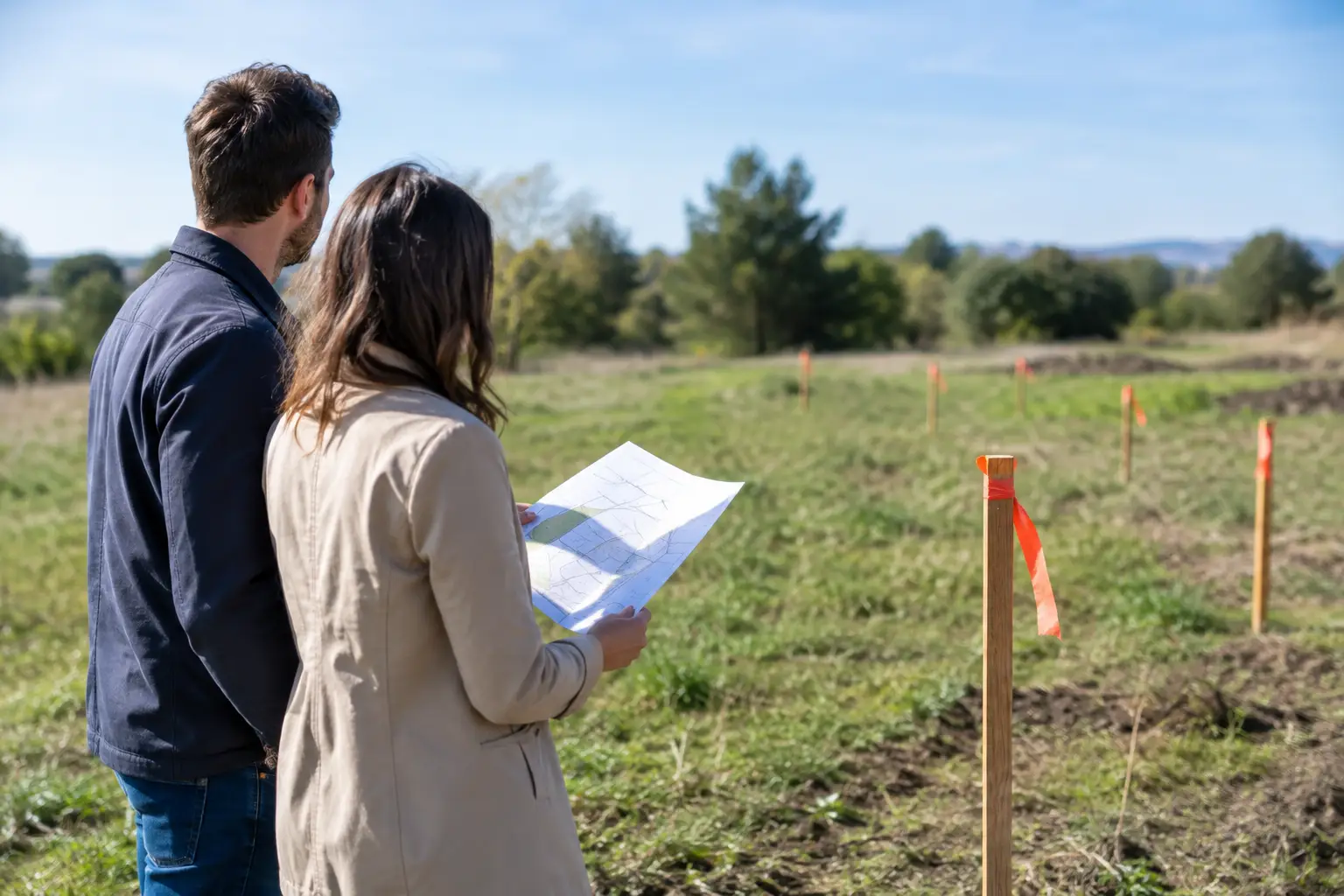
A fence may look like a boundary, but it is not necessarily one. The same is true of a tree row, a dirt road, a creek bed, or the corner stakes a seller points out during a showing. Boundary line disputes often begin when a buyer assumes a visible feature matches the legal property line, then discovers later that a neighbor, survey, or deed says otherwise.
For anyone buying vacant land, clear boundaries protect more than acreage. They affect where you can build, install a driveway, place a septic system, fence livestock, harvest timber, hunt, and eventually resell. A disputed edge of a parcel can be manageable, but it should never be treated as a minor detail before closing.
What Causes Boundary Line Disputes?
Most boundary line disputes are not caused by bad intentions. Rural and recreational parcels may have changed hands for decades without a modern survey. Corners can disappear under brush, old fences can be moved, and deed descriptions can rely on landmarks that no longer exist. A description such as “to the old oak” creates obvious problems if the tree is gone.
Conflicting records are another common issue. A recorded plat, deed, prior survey, tax map, and neighboring deed may not all describe the same line in the same way. County GIS maps are valuable research tools, but they are generally not legal surveys and often contain accuracy disclaimers. They can help you understand a parcel’s general shape and location, not establish where you can put a fence.
Disputes also arise when a neighbor has used a strip of land for a long time. That might mean mowing it, maintaining a road, grazing animals, or treating it as part of a yard. Long-term use does not automatically transfer ownership, but state laws involving adverse possession, boundary by agreement, prescriptive rights, and similar claims can make the situation more complex. The rules and required time periods vary significantly by state.
Why a Small Encroachment Can Be a Big Deal
A few feet may not sound like much until it affects the part of the parcel you planned to use. On a narrow residential lot, a misplaced fence can interfere with setbacks or a future building site. On acreage, an uncertain boundary can affect access to a road, a pond, timber, a creek, or a desirable homesite.
An encroachment can also create financing and resale challenges. A lender or title company may require further documentation before closing. A future buyer may be less willing to pay full value for property with an unresolved neighbor conflict. If the issue involves a driveway, utility line, gate, shed, or well, the practical stakes rise quickly.
That does not mean every overlap should stop a purchase. A minor fence encroachment in an unused wooded corner may be resolved with a written agreement or may have little effect on your intended use. A disputed access route, building area, or waterfront boundary deserves much more caution. The right response depends on location, intended use, title findings, survey results, and local law.
How to Check Boundaries Before You Buy Land
The smartest time to address boundary questions is during due diligence, while you can still negotiate, request documentation, or walk away under the terms of your purchase agreement. Start by asking the seller for the most recent survey, deed, title information, plat, and any known boundary agreements or disputes.
Read the legal description in the deed, not just the acreage listed in an advertisement. Acreage is often described as approximate. The legal description identifies the parcel being conveyed, whether through lot and block references, metes and bounds calls, section-township-range information, or another recognized method.
Next, physically inspect the property. Look for survey monuments, pins, marked trees, fence lines, roads, utility poles, gates, and signs of neighbor use. Take notes and photographs, but resist the urge to assume that what you see is legally decisive. A fence may have been built inside a line for convenience, or it may be on the neighbor’s land entirely.
If boundaries matter to your plans, hire a licensed land surveyor. A surveyor can research records, locate or set monuments where appropriate, and prepare a survey showing the surveyed boundaries and visible improvements. The cost depends on acreage, terrain, record quality, vegetation, accessibility, and the complexity of the parcel. For many buyers, it is a worthwhile investment compared with the cost of correcting a boundary problem after construction begins.
Do not rely on online parcel maps alone
Online county maps make land shopping easier, especially when comparing properties by area. They are useful for preliminary research, but their lines can be offset, generalized, or based on incomplete information. Treat them as a starting point for identifying questions, not proof of ownership.
The same caution applies to seller-provided sketches. They may be helpful context, yet only a qualified professional can perform a survey, and only the appropriate legal process can settle a true ownership dispute.
What to Do When a Potential Dispute Appears
If you find a possible conflict before closing, bring it into the open early. Ask the seller directly whether they have received complaints, signed agreements, granted access, or had conversations with neighboring owners. Request copies of any documents. Sellers should answer honestly and disclose known issues as required by applicable law.
Then identify the exact question. Is the fence in the wrong place? Does a neighbor claim use of a road? Is a shed crossing the line? Is there an easement that permits access without transferring ownership? These are different problems with different solutions.
A professional survey may clarify the physical facts. A title review can reveal recorded easements, exceptions, restrictions, or prior agreements. If the issue could affect your use or ownership, speak with a real estate attorney licensed in the state where the land is located. An attorney can explain the legal risk, review documents, and advise whether a boundary line agreement, easement, corrective deed, quitclaim deed, or another solution makes sense.
In many cases, a calm conversation between neighbors helps. People may be willing to sign an agreement, move a fence, or confirm access arrangements once the facts are clear. Keep discussions factual and respectful. Do not accuse a neighbor of trespass or agree to a boundary informally without understanding the consequences. A handshake may preserve goodwill, but it may not create the recorded protection a future owner needs.
Contract Terms That Give Buyers Room to Investigate
A land purchase agreement should give you adequate due-diligence time. That window lets you review title work, order a survey if needed, inspect the property, investigate zoning and access, and seek professional advice. Rushing through this period to secure a bargain can turn an affordable parcel into an expensive problem.
If a survey reveals a concern, you may be able to negotiate. Depending on the situation, the seller might resolve the issue before closing, provide a price adjustment, extend the due-diligence period, obtain a recorded agreement, or allow you to cancel under a contingency. The best option depends on whether the boundary question affects the value and use that made you want the land in the first place.
Buyers using owner financing should be especially thorough. Flexible terms can make land ownership more attainable, but they do not eliminate the need for title, boundary, access, and use due diligence. Whether you pay cash, finance through a lender, or buy directly from a seller, you want to know what you are purchasing.
Protect the Land After Closing
Once you own the property, keep your survey, deed, title documents, photographs, and any signed boundary or access agreements in a safe place. If you build a fence, driveway, cabin, or other improvement near a line, use the survey and verify local setback requirements first. It is far easier to plan correctly than to relocate an improvement later.
Consider introducing yourself to adjoining owners before starting work. A simple conversation can prevent surprises and set a cooperative tone. Land ownership is an opportunity to create something lasting, whether that means a homesite, a weekend retreat, a farm, or an investment. Clear boundaries give you the confidence to move forward with a plan that is truly yours.



Join The Discussion