
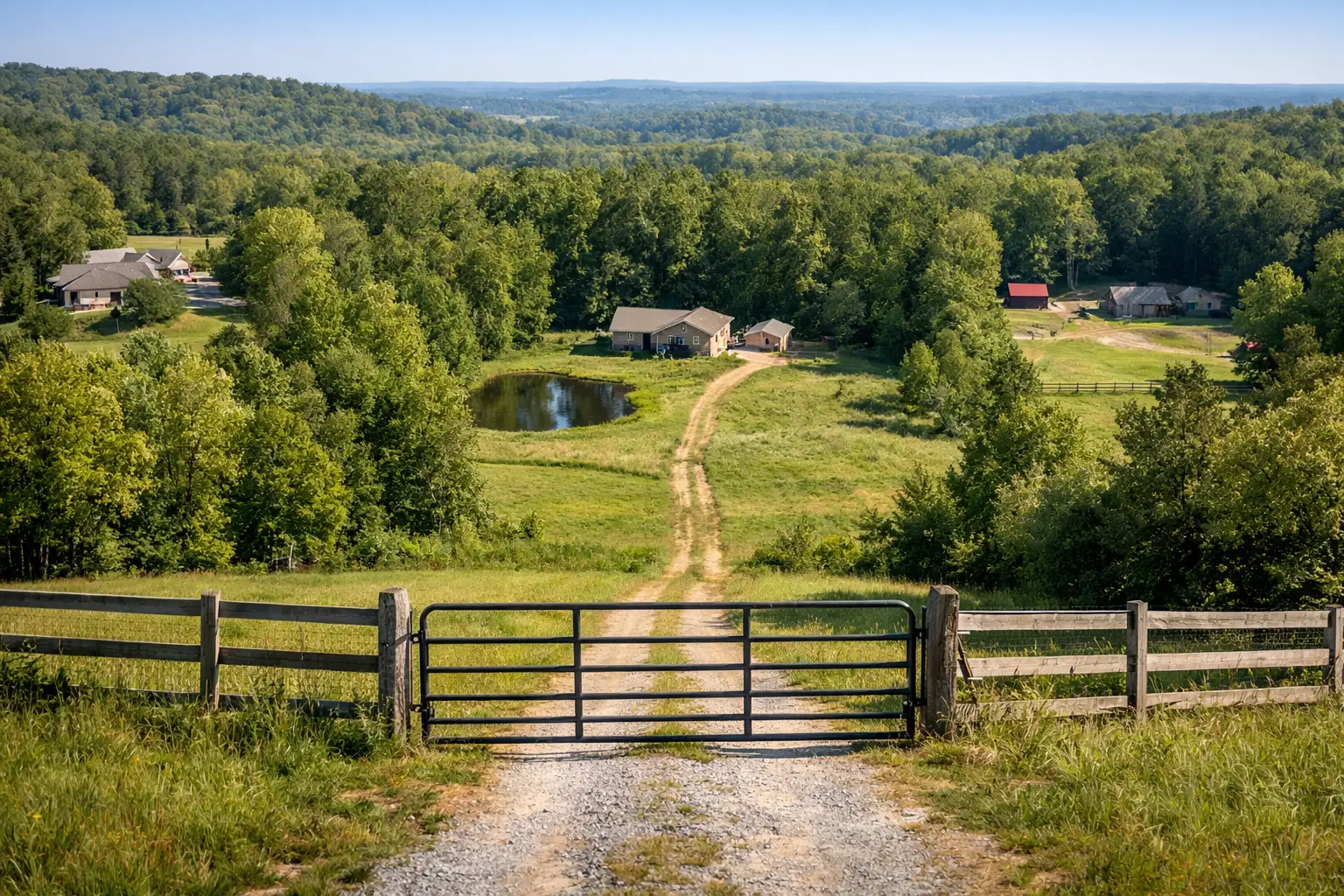
A parcel can look like a bargain right up until you ask one simple question: how do you legally get to it? That is where landlocked property access rights stop being a technical detail and start affecting value, financing, usability, and resale. If a property has no legal access to a public road, the cheapest acreage on the map can quickly become the hardest land to use.
For buyers, this issue matters long before closing. For sellers, it can shape pricing and buyer confidence. And for investors, it is often the difference between a smart buy and a problem that sits unsold. The good news is that landlocked land is not always a bad opportunity. Sometimes it is a fixable issue. Sometimes it comes with usable access that just needs to be documented properly. The key is knowing what you are actually buying.
What landlocked property access rights really mean
A landlocked property is generally a parcel that does not have direct legal access to a public road. That does not always mean you cannot physically reach it. You may see a dirt path, ranch road, or long driveway crossing neighboring land. But physical access and legal access are not the same thing.
That distinction matters. If you can drive across a neighbor’s land only because they have allowed it informally, that arrangement may not survive a sale, a dispute, or a change in ownership. Legal access usually comes through a recorded easement, deed language, subdivision plat, or another recognized right under state law. Without that, your ability to use the property can be uncertain.
This is why land buyers should never assume that visible access equals protected access. A road on satellite images can be helpful, but it is not proof.
Why access rights affect value so much
Access is one of the first filters serious buyers use, even if they do not say it out loud. If a parcel cannot be reached legally, many lenders will avoid it, title companies may raise concerns, and future buyers may pass altogether. That usually pushes value down.
At the same time, not every access issue deserves the same discount. A parcel with a clearly recorded 30-foot easement across a neighboring tract is very different from a parcel with no recorded access at all. One has a defined path to use. The other may require legal work, negotiation, or litigation.
Usability also changes the equation. Recreational land that you visit a few times a year may still work with a rough but legal easement. A homesite, farm, or future development parcel usually needs something stronger and more practical. Width, road condition, maintenance responsibility, and utility access all matter.
The most common ways legal access is created
When people talk about landlocked property access rights, they are usually talking about easements. An easement gives someone the legal right to use part of another person’s land for a specific purpose, such as ingress and egress. In plain terms, it lets you cross one property to reach another.
A recorded easement is often the cleanest solution. It should identify the benefiting parcel, the burdened parcel, the location of the access route, and the rights allowed. Vague language can create trouble later, especially if no surveyed route is attached.
There are also situations where access may arise by necessity, implication, prescription, or prior use, depending on state law. Those cases can be more complicated. An easement by necessity may apply when a parcel was split in a way that left one tract without access. A prescriptive easement may be claimed after long-term use under certain conditions. These are not automatic fixes, and the standards vary by state. What works in one county may not hold up the same way in another.
That is why buyers should treat any unrecorded or uncertain claim with caution. If the seller says, “everyone has always used that road,” that may be a clue, not a guarantee.
Red flags buyers should catch early
The biggest mistake is waiting until the end of the deal to investigate access. By then, emotions are involved, money has been spent, and options feel smaller.
Start with the listing details, parcel map, aerial imagery, and county records. If the property appears boxed in by surrounding private land, ask direct questions right away. Is there deeded access? Is there a recorded easement? Is the easement insurable? Is it wide enough for the intended use? Does it run all the way to a public road?
Another red flag is when access exists only through neighboring goodwill. That may work today and fail tomorrow. The same goes for roads that cross federal, state, tribal, or timber company land without clear documentation. Access can be restricted, seasonal, gated, or revocable.
Buyers should also watch for practical limitations. A legal easement that becomes impassable in wet weather may still be a problem. A narrow access strip may not support construction, utility installation, emergency vehicle entry, or subdivision plans. Legal access is the baseline. Functional access is the real goal.
How to verify access before you buy
The smartest buyers slow down here. Access deserves its own due diligence, separate from price, acreage, and views.
First, review the vesting deed and any prior deeds available in the chain of title. You are looking for language that grants or reserves ingress and egress. Then check recorded plats, surveys, and easement documents. County recorder and assessor records can be helpful, but they are not always complete or easy to interpret.
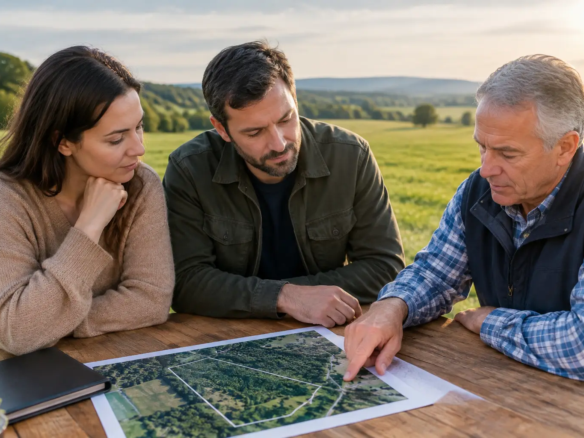
Next, involve the right professionals. A title company can identify recorded exceptions and access concerns. A real estate attorney can interpret state-specific rights and draft corrective documents if needed. A surveyor can confirm where the easement actually lies on the ground. In rural transactions, that last step is often worth the cost.
It also helps to physically inspect the route. Walk or drive it if possible. Confirm that the road you see matches the legal description you have. Sometimes the recorded easement is in one location and the actual path used for years is somewhere else. That mismatch can create conflict.
If you are buying remotely, be even more careful. Rural land deals often happen across state lines, and maps can hide access problems surprisingly well.
Can a landlocked parcel still be a good deal?
Yes, but only when the path to legal access is realistic and the purchase price reflects the risk. Some landlocked parcels are discounted enough to justify the extra work. If a neighboring owner is cooperative, a negotiated easement may solve the issue. In other cases, the parcel already has a legal right that simply needs better documentation.
This is where opportunity and discipline need to work together. A buyer who understands the problem may find value where others walk away. But a buyer who assumes the problem will sort itself out can get stuck.
Negotiation matters here. If access is unresolved, the price should reflect the cost, time, and uncertainty involved. That may include legal fees, survey work, recording costs, road improvement, or compensation to a neighboring owner. A seller asking full market value for inaccessible land is usually pricing hope, not reality.
For investors, resale should stay front and center. Even if you are comfortable with a shaky access situation, your future buyer may not be. A parcel that looks cheap now can stay cheap if the access issue remains unresolved.
What sellers should do before listing
Sellers can improve buyer trust and shorten the sales cycle by dealing with access upfront. If there is a recorded easement, gather the documents and make them easy to review. If access has been used informally for years, consider whether it can be formalized before the property hits the market.
This is especially important with vacant land because buyers often have fewer obvious clues than they would with a house. A home with a driveway usually signals some level of access. Raw land does not offer that comfort. Clear paperwork can make a major difference.
If you are listing on a land-focused marketplace such as BuyVacantLand.com, access details deserve to be part of the property story, not buried in fine print. Buyers shopping for rural or recreational parcels are often comparing multiple properties quickly. The more clearly you explain the access situation, the more qualified your inquiries tend to be.
The practical mindset buyers need
Buying land is about possibility, but access determines whether that possibility can actually be used. You do not need to fear every parcel with an access question. You do need to separate assumptions from documents.
The right parcel may still be worth pursuing if the legal route is clear or can be secured on reasonable terms. The wrong parcel is the one that leaves you relying on handshakes, guesswork, or roads that exist only on a map. When you treat access as a core part of value, not a side issue, you put yourself in a much stronger position to buy land that works for your plans now and later.


Join The Discussion