

Traditional banks are the biggest obstacle to your land sale. Most lenders refuse to finance raw land, which forces you to wait for a rare cash buyer who usually demands a steep discount. You don’t have to wait. Learning how to sell land with owner financing turns your property into an accessible asset for a much larger pool of buyers. It’s the most efficient way to move inventory in today’s market while securing a higher total return through interest.
You’re likely tired of watching your land sit idle while property taxes eat your profits. It’s a frustrating burden, but you can solve it by becoming the lender yourself. This guide provides a direct path to securing a higher sale price and generating reliable monthly passive income. We’ll show you how to set competitive interest rates between 6% and 12%, navigate the 2026 FinCEN reporting rules, and structure contracts that protect you from default. Stop waiting for a bank’s approval and take control of your transaction today.
Key Takeaways
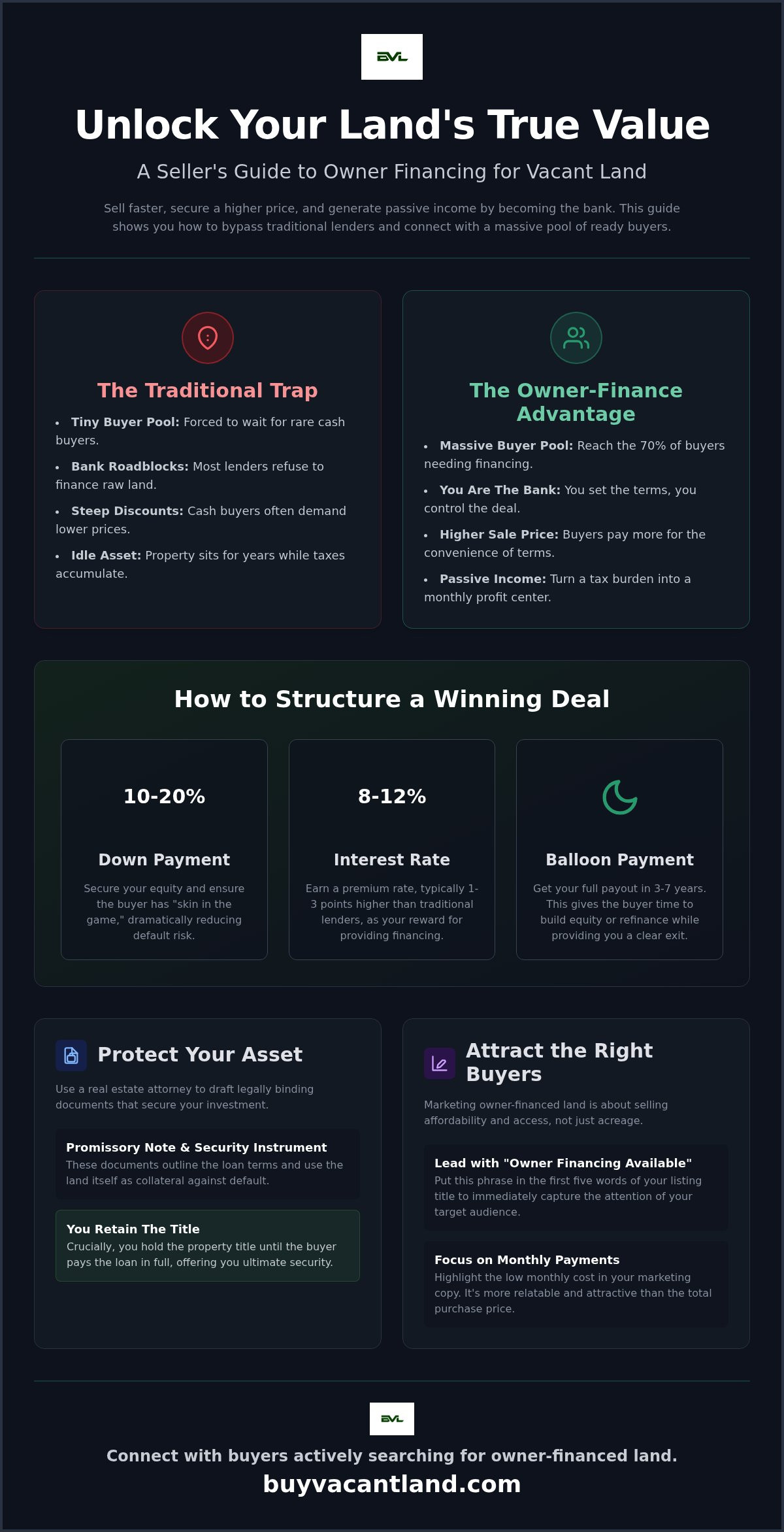
- Bypass banks that refuse raw land loans to reach a massive pool of ready buyers immediately.
- Secure your equity with 10% to 20% down payments and interest rates between 8% and 12%.
- Learn how to sell land with owner financing by prioritizing monthly affordability in your marketing titles.
- Use a real estate attorney to draft a Promissory Note and Security Instrument that protects your property from default.
- Generate reliable monthly passive income while retaining control of your title until the buyer pays in full.
Why Owner Financing is the Ultimate Strategy for Selling Vacant Land
Selling raw land is a different game than selling a house. Most sellers struggle because they rely on a tiny pool of cash buyers. You can change that immediately. By offering seller financing, you become the lender. You extend credit to the buyer; they pay you back over time. This simple shift removes the biggest barrier in real estate: the bank. Understanding how to sell land with owner financing is the difference between a property that sits for years and one that sells in weeks.
Traditional financing for vacant land is almost non-existent for the average buyer. Banks rarely want to touch it. When you offer terms, you open your listing to the 70% of buyers who don’t have $50,000 or $100,000 in liquid cash. You also gain leverage. Buyers are willing to pay a higher total sale price in exchange for the convenience of monthly payments. Listing your property on a specialized marketplace like BuyVacantLand.com connects you directly with buyers searching for these specific terms. It’s a win for both sides.
The Problem with Traditional Land Lending in 2026
Banks view raw land as high-risk collateral. It produces no immediate cash flow and is harder to liquidate than a home. In 2026, typical land loans require massive down payments of 30% to 50%. This high entry cost disqualifies thousands of motivated buyers. Even if a buyer qualifies, the bank’s appraisal and underwriting process can drag on for months. Owner financing bypasses this bureaucracy entirely. You set the rules. You decide the down payment. You close the deal on your timeline, not the bank’s.
Creating Passive Income from Dead Capital
Vacant land is often dead capital. It sits there while you pay property taxes and maintenance costs. You can transform this non-performing asset into a consistent monthly income stream. When you learn how to sell land with owner financing, you collect both principal and interest. Consider these benefits:
- Higher Interest Rates: You can typically charge 8% to 12% interest. This far exceeds returns from standard savings accounts.
- Monthly Cash Flow: Receive a check every month instead of waiting for a single lump sum.
- Note Liquidity: If you need a large amount of cash later, you can sell the mortgage note to an investor for a lump sum.
This strategy provides peace of mind. You retain the security of the land itself while enjoying the benefits of a performing financial asset. It turns a tax burden into a profit center.
Structuring Your Deal: Rates, Terms, and Down Payments
You are the bank now. Success depends on a structure that protects your equity while ensuring the buyer can actually afford the monthly check. When you master how to sell land with owner financing, you don’t just pick numbers out of a hat. You use a formula that balances risk and reward. Start with the down payment. Demand 10% to 20% of the purchase price upfront. This ensures the buyer has “skin in the game.” If they have thousands of dollars invested, they are far less likely to walk away when times get tough.
Interest rates for land contracts in 2026 typically range from 8% to 12%. This is higher than a traditional home mortgage because raw land is a speculative asset. Owner financing structures vary, but your interest rate is your reward for taking on the role of the lender. You are providing a service that banks won’t. Charge accordingly. To keep the deal attractive, calculate the monthly payments using a 15 or 30 year amortization schedule. This keeps the monthly cost low for the buyer, even if the actual loan duration is much shorter.
Setting the Right Interest Rate for 2026
Balance your profit goals with the buyer’s reality. If you set the rate too high, you increase the risk of default. In the current 2026 market, traditional land loans from Farm Credit or similar lenders sit between 6.5% and 10%. Your rate should be 1 to 3 percentage points higher than these institutional rates. If you offer a “no credit check” option, you can justify a premium rate at the top of the 12% range. This attracts non-traditional buyers who have cash but can’t satisfy bank scrutiny. When you are ready to find a buyer who appreciates these terms, consider listing your property on a specialized marketplace.
The Power of the Balloon Payment
Most land sellers don’t want to wait 30 years to get paid in full. Use a balloon payment to shorten the timeline. A balloon payment is a large final sum due after a few years of regular installments. Typically, you set the loan term for 5 to 10 years, but the balloon date at 3 to 7 years. This gives the buyer enough time to improve the land, build equity, or fix their credit so they can eventually refinance with a traditional lender. It provides you with a clear exit strategy and a total payout much sooner than a full 30-year term would allow.
Marketing Your Property: How to Attract Owner-Finance Buyers
You have your interest rates set and your balloon payment planned. Now you must find a buyer who values those terms. Marketing owner-financed land is about selling affordability, not just dirt. Most sellers make the mistake of burying their financing offer in the fine print. Don’t do that. Put “Owner Financing Available” or “Low Monthly Payments” in the first five words of your listing title. This immediately captures the attention of buyers who have been rejected by traditional lenders. It stops the scroll and starts the conversation.
Focus your listing copy on the monthly cost. While the total price is important, your target buyer is solving for a monthly budget. If you want to master how to sell land with owner financing, you must speak the language of cash flow. Instead of just listing a $40,000 price tag, lead with “$400 per month.” This shift in perspective makes your property accessible to a much larger audience. Highlight the specific potential of the parcel. Mention if it is ideal for an off-grid cabin or a future residential build. Buyers want to see how their monthly investment turns into a usable asset.
Optimizing Your Listing for Search
Include high-intent keywords like “low down payment land” and “no credit check land” in your description. These phrases are what motivated buyers are typing into search engines in 2026. State clearly whether you are using land contracts or deeds of trust. This transparency builds immediate trust with savvy buyers who understand the process. You can learn more about owner financed land to refine your listing language and ensure you are using terms that resonate with current market trends.
Leveraging BuyVacantLand.com to Find Your Buyer
Avoid generic real estate websites where your vacant land gets lost between suburban home listings. Use specialized marketplaces instead. Our platform is specifically designed for cheap land for sale and owner-financed deals. It connects you with a national audience that is already looking for raw, undeveloped parcels. Listing here ensures your property is seen by people who use the “owner finance” filter as their primary search tool. It cuts through the noise and puts your offer in front of the right eyes immediately. This streamlined approach saves time and moves your property faster.
Protecting Your Asset: Managing Risks and Legal Requirements
You have found a buyer and agreed on terms. Now you must protect your equity. Vetting is your primary defense against future headaches. Do not skip this step. Request a basic credit report and recent pay stubs to confirm the buyer has a stable income. If they cannot provide these documents, walk away. Your goal is a smooth transaction, not a legal battle over a non-performing asset. Understanding how to sell land with owner financing requires you to act like a bank, which means verifying the borrower’s ability to pay before you sign.
Choosing the right legal document is your next priority. In many states, a Land Contract, also known as a Contract for Deed, is the most seller-friendly option. You keep the title in your name until the buyer makes the final payment. If they default, the process to reclaim the land is often faster than a full foreclosure. A Deed of Trust is different. The title transfers to the buyer immediately, but a third-party trustee holds the power to sell the property if payments stop. Consult a local real estate attorney to determine which structure provides the most security in your specific jurisdiction.
Don’t get stuck with the buyer’s bills. Your contract must explicitly state that the buyer is responsible for property taxes and liability insurance from the day of closing. If they fail to pay these, it should trigger a default clause. This protects you from tax liens or lawsuits while the buyer has possession of the land. It is also important to note that while the Dodd-Frank Act generally does not apply to vacant land, you must comply with the 2026 FinCEN reporting rules if you sell residential-zoned land to a legal entity or trust. Compliance is simple, but missing a filing is a risk you don’t need.
A Pragmatic Seller’s Vetting Framework
Focus on the down payment. A buyer who puts down 20% has significant skin in the game. They are far less likely to walk away from their investment than someone who only paid a few hundred dollars. Verify their employment and call two references to establish a pattern of reliability. Due diligence is your responsibility to verify the buyer’s intent before you commit. If a buyer is hesitant to share basic financial information, they are not a serious candidate. List your property on our marketplace to connect with buyers who are prepared for these requirements.
Essential Contract Clauses for Raw Land
Protect the physical state of your property with specific clauses. Include a “No-Build” or “Permit-Required” clause to prevent unauthorized structures or environmental damage before the loan is paid. You also need a “Due on Sale” clause. This prevents the buyer from flipping the land to someone else without paying you in full first. Finally, insist on a professional title search during the closing process. This ensures the transfer is clean when the final payment arrives. These steps eliminate uncertainty and ensure your passive income remains secure.
Step-by-Step: The Closing Process for Seller-Financed Land
You’ve found a qualified buyer. Now you need to close the deal. The closing process is where your preparation pays off. Mastering how to sell land with owner financing requires a disciplined approach to paperwork. Start by finalizing the numbers. Create a simple term sheet that lists the sale price, the exact interest rate, and the down payment amount. Have both parties sign this before spending money on legal drafts. It ensures everyone is on the same page from day one and prevents last-minute negotiations.
Once the terms are clear, hire a real estate attorney to draft the final documents. Don’t use generic templates you find online. You need a legally binding Promissory Note and a Security Instrument, such as a Land Contract or Deed of Trust. These documents are your insurance policy. They define exactly what happens if a payment is late or if the buyer breaches the agreement. A professional draft protects your interest and ensures the contract is enforceable in your specific county. It’s a small upfront cost for long-term security.
The actual closing doesn’t require a bank’s boardroom. You can meet at a local notary’s office to finalize the transaction. Collect the down payment in certified funds. Never take a personal check for the initial deposit. Both parties sign the documents in front of the notary. Finally, take the signed Security Instrument to the local county recorder’s office immediately. Recording the document puts the world on notice that you have a financial interest in the property. It prevents the buyer from taking out other loans against the land without your knowledge. Speed is essential here; record the paperwork the same day you sign.
Document Preparation Checklist
- The Promissory Note: This is the buyer’s legal promise to pay you back. It includes the loan amount, interest rate, and payment schedule.
- The Purchase Agreement: This outlines the specific details of the land sale and the responsibilities of both parties.
- Disclosure Forms: Use state-mandated forms to document the land’s condition, zoning, and any known easements.
Managing Payments and Servicing the Loan
Collecting payments every month can become a chore. Use an automated payment system or hire a third-party note servicing company to handle the billing. They collect the money, track the principal and interest, and provide the buyer with annual tax statements. This keeps your records meticulous for tax reporting purposes. It also adds a layer of professional distance between you and the buyer. If a payment is late, the servicing company handles the initial outreach. Ready to start? You can sell land faster by listing on our specialized marketplace today and reaching buyers who are ready to sign.
Start Earning Passive Income from Your Land Today
You now have the blueprint to stop waiting for a cash buyer. Owner financing removes the bank hurdle and puts you in control of the transaction. By requiring a solid down payment and setting market-reflective interest rates, you turn an idle asset into a high-yield investment. You don’t have to let property taxes eat your potential profits while waiting for a traditional lender’s approval that may never come. The power to close the deal is entirely in your hands.
Mastering how to sell land with owner financing is about efficiency and risk management. You’ve learned how to vet buyers, structure balloon payments, and use legal instruments that protect your equity. The process is simple when you follow a logical sequence. The final step is putting your property in front of the right audience to secure your first monthly payment and achieve genuine peace of mind. Your land is a valuable resource; it’s time to make it work for you.
Our platform provides a direct connection to thousands of land buyers nationwide. This is a focused marketplace for vacant land only. We don’t list homes or rentals, so your property stays in front of the right people. List Your Land on BuyVacantLand.com Today to reach motivated buyers specifically looking for owner-financed deals. Take the first step toward a faster sale and reliable passive income right now. You can do this.
Frequently Asked Questions
Can I sell land with owner financing if I still have a mortgage on it?
You can, but your existing lender likely has a “due-on-sale” clause. This clause allows the bank to demand full payment of your loan if you transfer any interest in the property. Most sellers wait until the land is free and clear or use the buyer’s down payment to pay off the remaining balance. Consult your mortgage documents before offering terms to avoid a surprise call for the full balance.
What happens if the buyer defaults on an owner-financed land contract?
You reclaim the property and typically keep all payments made to date. The specific process depends on whether you used a Land Contract or a Deed of Trust. In many states, reclaiming raw land through a forfeiture clause is faster and less expensive than a traditional home foreclosure. You can then list the property again, essentially getting paid twice for the same piece of dirt.
Do I need a huge down payment from the buyer to make it worth it?
A down payment of 10% to 20% is the standard target for land deals. This amount covers your closing costs and ensures the buyer is financially committed to the deal. Learning how to sell land with owner financing requires you to prioritize buyers with enough “skin in the game” to prevent them from walking away. A solid down payment is your primary insurance against default.
Are there tax benefits to selling land with owner financing?
Yes, you can often defer capital gains taxes through an installment sale. Instead of paying taxes on the full sale price in a single year, you pay them proportionally as you receive the principal payments. This strategy can keep you in a lower tax bracket and maximize your long-term net profit. It turns a one-time tax hit into a manageable, multi-year expense.
How do I report the interest income from a land sale to the IRS?
Report the interest you receive as ordinary income on Schedule B of your tax return. You must separate each payment into principal and interest components. Use IRS Form 6252 to track the installment sale and ensure you are only paying capital gains on the principal portion. Keeping meticulous records is essential for accurate reporting and avoiding potential audits.
Is owner financing legal in every state for vacant land?
Owner financing is legal in all 50 states, but the regulations vary significantly. Some states have specific rules regarding interest rate caps, disclosure requirements, and foreclosure timelines. For example, Texas has very strict laws governing executory contracts for land. Always have a local real estate attorney review your documents to ensure they comply with your specific state statutes.
Can the buyer build on the land before the loan is paid off?
The buyer can only build if your contract explicitly allows it. Many sellers include a “no-build” clause to prevent the construction of unpermitted or low-quality structures that could decrease the land value. If you allow building, require the buyer to obtain all necessary permits and carry liability insurance. This protects your collateral if the buyer stops paying mid-construction.
How do I determine a fair interest rate for selling my land in 2026?
Target an interest rate between 8% and 12% based on current 2026 market trends. Traditional land lenders currently offer rates between 6.5% and 10% for qualified borrowers. You are providing a valuable service by bypassing bank credit checks and long approval times. Charging a 1% to 3% premium over institutional rates is a pragmatic way to compensate for your risk.




Join The Discussion